An apology letter is one of the most powerful documents you can present to the court when facing a DUI charge in New South Wales. This comprehensive guide will walk you through crafting a sincere, effective letter that demonstrates genuine remorse and responsibility.
Why Courts Consider Apology Letters
Courts in NSW view apology letters as evidence of your character and willingness to take responsibility. Judges and prosecutors use these documents to assess whether you pose an ongoing risk and whether rehabilitation is likely. A well-written letter can significantly influence sentencing outcomes and demonstrate that you’ve genuinely learned from your mistake.
The Essential Elements of an Effective Apology Letter
Key Components
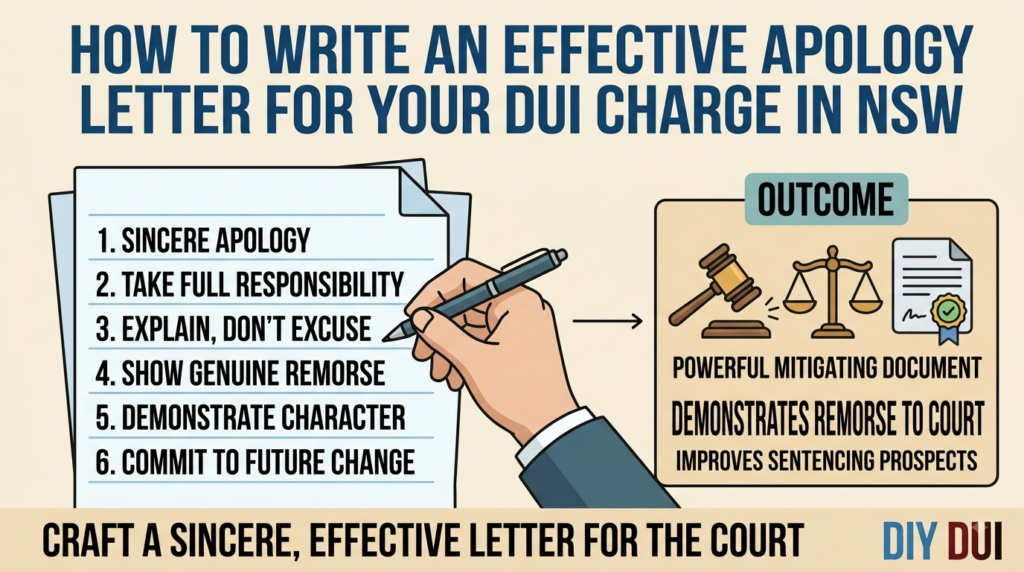
- Clear acknowledgment of the offense – Specifically state what you did and why it was wrong
- Genuine remorse – Express authentic feelings about your actions and their impact
- Understanding of consequences – Demonstrate awareness of risks you created for others
- Personal accountability – Take full responsibility without excuses
- Concrete steps for change – Outline specific actions you’ve taken or will take
- Impact on family – Show how this has affected your loved ones and your commitment to them
- Professional tone – Maintain formal language and structure throughout
Structuring Your Apology Letter
1. Opening Statement
Begin by directly addressing the recipient (typically “Your Honour” if submitting to court) and clearly state the purpose of your letter. Avoid vague language or hedging—be direct about what you’re doing and why.
2. Clear Acknowledgment of Your Actions
Describe exactly what you did on the day in question. Don’t minimize or make excuses. State the facts as they occurred and acknowledge that you made a serious error in judgment. This section is critical—courts can tell when someone is genuinely accepting responsibility versus minimizing their conduct.
3. Understanding of the Impact
Demonstrate that you understand the serious risks your actions created. Discuss how drink driving endangers innocent lives—other road users, pedestrians, passengers, and yourself. This shows the court that you’ve genuinely reflected on the consequences of your behavior.
4. Expression of Genuine Remorse
This section should convey authentic emotion and regret. Explain how this incident has affected you personally, your relationships with family, and your sense of responsibility. If applicable, mention how your family has been impacted by your choices—this demonstrates self-awareness and understanding of your responsibilities to those who depend on you.
5. Personal Accountability
Take full responsibility for your actions without making excuses. Avoid blaming circumstances, stress, or other factors. While context can be provided in your defense strategy, the apology letter should focus purely on accepting responsibility for what you did.
6. Concrete Steps for Change
Outline specific, measurable actions you’ve taken or will take to prevent this from happening again. These might include:
- Attending alcohol awareness programs
- Arranging alternative transport solutions
- Seeking counseling or therapy
- Limiting social situations involving alcohol
- Installing an interlock device voluntarily
- Taking psychology courses on substance abuse
7. Closing and Signature
End with a brief closing statement reiterating your commitment to change and thanking the reader for considering your letter. Use a formal closing such as “Yours respectfully” or “Yours sincerely.”
Pro Tip: Family References Matter
Courts place significant weight on your responsibilities to family members. Mentioning your commitment to your spouse, children, or aging parents demonstrates maturity and provides judges with evidence that you have important relationships and reasons to reform your behavior. This context can be highly persuasive in sentencing considerations.
Sample Structure and Language
While your letter must be personal and authentic, this structure provides a framework:
Dear Your Honour,
I am writing to express my sincere remorse for [specific offense description]. On [date], I made a serious error in judgment that I deeply regret.
I fully acknowledge that I [drove under the influence/drove with an illegal blood alcohol level]. I understand that my actions endangered lives—not only my own, but the lives of innocent people on the road. There is no excuse for this behavior.
This incident has profoundly affected me and my family. My [spouse/children/family members] have had to cope with the consequences of my poor judgment. [Personal impact statement]. This experience has made me acutely aware of my responsibilities not only as a person, but as someone whose actions directly impact those I care about most.
I have taken concrete steps to ensure this never happens again: [specific actions taken]. I am committed to [future preventive measures].
I sincerely apologize and take full responsibility for my actions. I am committed to becoming a more responsible person.
Yours respectfully,
[Your Name]
Important Considerations
Key Considerations
- Length: Keep your letter to 1-2 pages. Courts prefer concise, focused letters over lengthy narratives.
- Authenticity: Write in your own words and voice. Courts can identify ghostwritten or overly formal letters.
- No legal arguments: Save legal defenses for a lawyer. An apology letter is about character, not legal strategy.
- Timing: Submit your letter well before your court appearance, following any guidance from your lawyer if you have one.
- Professional formatting: Use standard business letter format on good quality paper (if printing).
Related Resources
- Understanding NSW Licence Disqualification Periods After a DUI Conviction
- The NSW DUI Sentencing Process: What to Expect in Court
- How Mental Health and Medical Evidence Can Support Your DUI Defense
- Negotiating with NSW Prosecutors: Strategies for Better Outcomes
- Defending Against Breath Test Refusal Charges in NSW
- Building a Strong DUI Defense: What You Need to Know
- DUI Character References: Why They Matter and How to Use Them
External Resources
- NSW Road Transport Act 2013 – Official legislation governing DUI offenses
- NSW Government: Drink and Drug Driving Information – Official NSW government resources
- NSW Local Court Services – Court procedures and guidelines
Need Professional Help With Your DUI Case?
An experienced DUI lawyer can guide you through every step of your case, including crafting the right legal strategy and presenting compelling character evidence. Your apology letter is one tool—professional legal representation ensures all aspects of your defense work together.
Legal Disclaimer
This article provides general information about apology letters in DUI cases and should not be construed as legal advice. Laws and court procedures vary by jurisdiction and individual circumstances. Always consult with a qualified DUI lawyer in your jurisdiction before submitting any documents to court. This information is current as of the publication date but may change. The DIY DUI Method is not a substitute for professional legal representation. If you’re facing DUI charges, seek advice from a licensed attorney.
Frequently Asked Questions
1. How important is an apology letter in NSW DUI cases?
Very important. NSW courts view sincere apology letters as evidence of genuine remorse and accountability. A well-written letter can significantly influence sentencing, often combined with other mitigation factors, it can lead to more lenient outcomes.
2. What should an apology letter to the court include?
Include: clear acknowledgment of the offense, genuine expression of remorse, understanding of consequences and risks created, personal accountability without excuses, concrete steps for change, impact on family and community, and commitment to rehabilitation.
3. Can family members provide support statements alongside my apology letter?
Yes, and this is powerful. Family statements about your character, efforts to change, family impact, and support for rehabilitation strengthen your case. Courts value family perspective as authentic and long-term testimony.
4. How long should an apology letter be?
Typically 1–2 pages (300–500 words). Long enough to be substantive and sincere, short enough to hold judicial attention. Quality and authenticity matter far more than length. Judges can detect hollow or over-written apologies.
5. Should I mention my family in my apology letter?
Yes. Acknowledging impact on family, showing commitment to family responsibilities, and demonstrating family support all strengthen apology letters. Courts recognize family context as valuable evidence of your values and rehabilitation motivation.
6. Can I apologize if the DUI incident harmed others?
Yes, and such cases benefit from clear apology. If your incident caused injury or property damage, a genuine apology recognizing that harm is essential. You can address it without admitting liability or contradicting legal advice.
7. Should a lawyer write the apology letter or should I write it personally?
You should write it personally; if you have a lawyer, they can review it. Courts recognize personal, authentic voice. A lawyer can check it doesn’t contradict your defense strategy and is legally sound, but the sentiment must be genuinely yours.
8. When should I submit my apology letter to the court?
Submit it early in sentencing, typically as part of mitigation documentation before the sentencing hearing. If you have a lawyer, they can coordinate timing. Earlier submission shows genuine commitment; last-minute letters appear tactical.
Related Resources
- Mental Health & Medical Evidence in NSW DUI Cases
- Building a Strong DUI Defense in NSW: What You Need to Know
- The NSW DUI Sentencing Process: What to Expect in Court
- Character References in DUI Cases: Why Family Matters
- Negotiating with NSW Prosecutors: Strategies for Better Outcomes
- Understanding NSW Licence Disqualification Periods
- The DIY DUI Method: Comprehensive Defence Planning
- Essential Court Documents for Your DUI Case
Legal Disclaimer: This article provides general legal information only and does not constitute legal advice. Every DUI case is unique with different facts, circumstances, and legal issues. This content should not be relied upon as a substitute for professional legal advice from a qualified attorney. Consult with a licensed NSW criminal lawyer who can review your specific case, evidence, and circumstances before making any decisions. The DIY DUI Method is an educational resource only.
Take Action: NSW DUI Program
Facing a drink driving charge?
Facing a drink driving charge? The DIY DUI Method NSW Program provides court-preparation information and tools. It is not a law firm and does not provide legal advice or representation.
⚠️ Legal Disclaimer
This article provides general educational information about NSW drink driving law and court procedures. It is not legal advice and does not constitute a lawyer-client relationship. Laws change regularly and may vary based on individual circumstances. Always consult with a qualified NSW lawyer regarding your specific situation before proceeding with any court matters.