Understanding the NSW DUI sentencing process helps you prepare effectively and know what to expect. This comprehensive guide walks through each phase, from conviction through sentencing, explaining the factors courts consider and strategies for achieving the best possible outcome.
Why Sentencing Preparation Matters
Sentencing outcomes vary dramatically based on preparation. The difference between a well-prepared case and an unprepared one can be thousands of dollars in fines, months of licence disqualification, and whether you face imprisonment. Understanding what judges consider gives you control over your outcome.
Pre-Sentence Reports: Building Your Record
What Is a Pre-Sentence Report?
A pre-sentence report (PSR) is prepared by a probation officer and provides the judge with detailed information about your background, education, employment, family situation, and personal circumstances. This report significantly influences sentencing decisions—often more than any other single factor.
Your Pre-Sentence Interview: What to Expect
The probation officer will interview you thoroughly. Be honest and comprehensive. This interview determines much of what the report contains, and your responses are verified.
- Family situation and responsibilities (spouse, children, dependents)
- Employment history and current work situation
- Education and training completed
- Medical and mental health history
- Substance use and alcohol history
- Prior criminal history
- Community ties and support systems
- Impact of conviction on your family and employment
- Housing and living situation stability
- Financial circumstances
Important: Dishonesty in your pre-sentence interview negatively affects the report and your sentencing outcome. Probation officers verify key facts, and inconsistencies damage your credibility with the judge.
The Sentencing Court Hearing: Four Key Stages
1. Prosecution Submissions
The prosecutor presents arguments about the seriousness of the offense, aggravating factors, and recommended sentencing range.
2. Defence Submissions
You (or your lawyer, if you have one) present arguments about mitigating factors, your character, family situation, rehabilitation efforts, and reasons for leniency.
3. Your Opportunity to Address the Court
In most cases, you have the opportunity to address the court before sentencing. Speaking effectively can significantly reduce sentencing.
4. Judicial Determination
The judge considers all information and determines penalties including fines, licence disqualification, community service, or imprisonment.
Sentencing Factors NSW Courts Consider
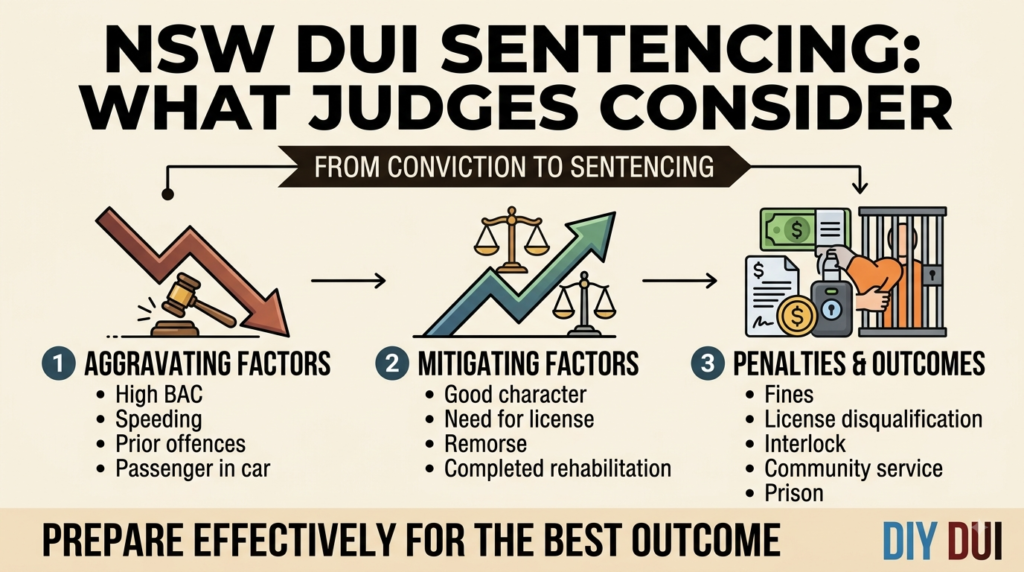
Aggravating Factors (Increase Sentencing Severity)
- High blood alcohol level (especially 0.15+)
- Causing an accident or injury
- Prior DUI convictions
- Driving during restricted hours (midnight-5am)
- Driving with passengers, especially children
- Refusal of breath test
- Speeding or other dangerous driving behaviours
- Driving with suspended or disqualified licence
Mitigating Factors (Reduce Sentencing Severity)
- First offense (most important mitigating factor)
- Genuine remorse and apology
- Young age or age-related vulnerabilities
- Good character and employment record
- Family responsibilities and support
- Mental health or substance abuse treatment
- Strong community and family ties
- Rehabilitation efforts since the offense
- Assistance to authorities
- Early guilty plea (demonstrates responsibility)
Building Your Sentencing Case: Preparation Strategy
Character References
Character references from family members are particularly powerful. These should be detailed and specific, demonstrating intimate knowledge of your character and rehabilitation.
Your Apology Letter
A genuine apology letter demonstrates remorse and responsibility. It should express genuine remorse, acknowledge impact, explain what you’ve learned, outline rehabilitation steps, and demonstrate understanding of seriousness.
Frequently Asked Questions
Yes. NSW courts explicitly consider family responsibilities as a mitigating factor. Family references documenting your responsibilities strengthen this mitigation significantly.
Related Resources
- How to Write an Effective Apology Letter for Your DUI Charge in NSW
- DUI Character References: Why They Matter and How to Use Them
- Understanding NSW Licence Disqualification Periods After a DUI Conviction
Get Started Today
Ready to prepare effectively for your sentencing?
Ready to prepare effectively for your sentencing? The DIY DUI Method provides comprehensive guidance to help you build the strongest possible case and maximize your chances of the best outcome.
Legal Disclaimer
This article provides general information about NSW DUI sentencing procedures and should not be construed as legal advice. Sentencing practices and guidelines may change and vary significantly based on individual circumstances, court jurisdiction, and judicial discretion. The factors, ranges, and outcomes described are general guidelines only—your specific case may result in different outcomes. Always consult with a qualified DUI lawyer licensed to practice in NSW for case-specific advice and legal representation. The DIY DUI Method is an educational resource only and is not a substitute for professional legal representation. While we strive for accuracy, we cannot guarantee all information is current or applicable to your situation. Your reliance on this information is at your own risk.