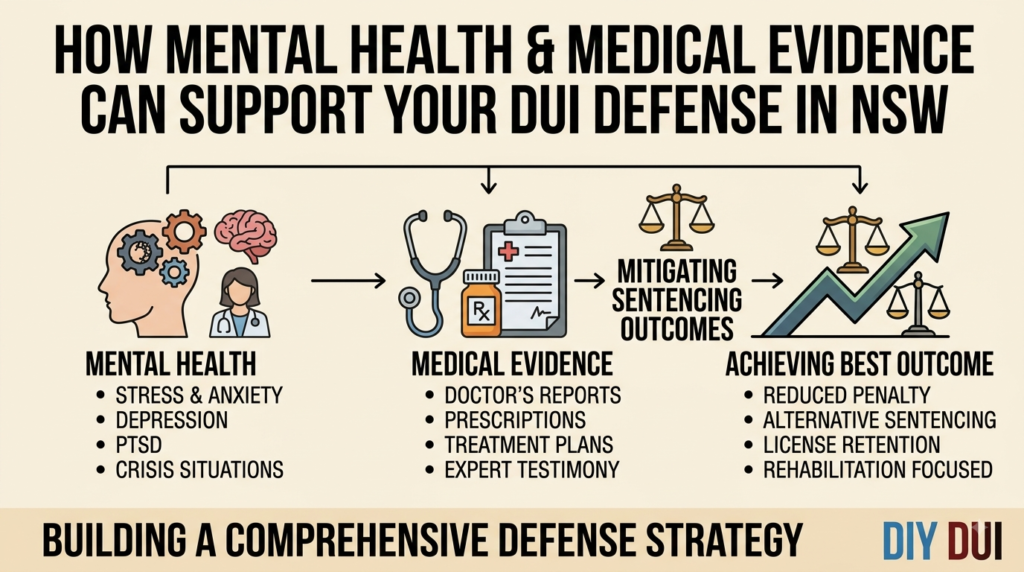
Mental health conditions and medical evidence can play a crucial role in DUI defense, particularly in mitigating sentencing outcomes. Understanding how these factors are presented to courts and what evidence supports them is essential for building a comprehensive defense strategy.
Mental Health as a Mitigating Factor
NSW courts recognize that underlying mental health conditions—such as depression, anxiety, PTSD, and substance abuse disorders—can contribute to poor decision-making and risky behavior. While these conditions don’t excuse drink driving, they can influence sentencing when properly documented and presented by qualified professionals.
Mental Health Conditions That May Affect Your Case
Depression and Anxiety Disorders
Depression and anxiety disorders can impair judgment and lead to self-medicating behaviors, including increased alcohol consumption. Evidence of these conditions—particularly if documented before the DUI incident—can demonstrate that you were struggling with underlying issues rather than making a simple bad choice.
Post-Traumatic Stress Disorder (PTSD)
PTSD from military service, accidents, or other trauma can contribute to risky behavior as a coping mechanism. If you have documented PTSD, this becomes powerful evidence of circumstances beyond your control that contributed to the incident.
Substance Use Disorders
If you have a diagnosed alcohol or substance use disorder, this is critical evidence for your case. It demonstrates that you have a recognized medical condition requiring professional treatment rather than simply poor judgment on a single occasion.
Sleep Disorders and Fatigue-Related Impairment
Medical evidence of sleep disorders, sleep apnea, or chronic fatigue can be relevant if these conditions contributed to impaired driving. Some people experience similar impairment to intoxication when severely sleep-deprived.
Key Point: Medical Documentation
The strength of mental health and medical evidence depends entirely on documentation. Contemporaneous medical records, diagnosed conditions, and ongoing treatment demonstrate credibility far more effectively than after-the-fact claims. If you have pre-existing mental health or medical conditions, gather documentation from your treating healthcare providers.
Medical Conditions Relevant to DUI Cases
Diabetes and Blood Sugar Irregularities
Severe hypoglycemia (low blood sugar) can produce symptoms similar to intoxication—slurred speech, impaired coordination, confusion, and poor judgment. If you have diabetes, medical evidence showing a hypoglycemic episode at the time of driving can be highly relevant to your defense, particularly if breath test results may have been affected.
Medications with Impairment Effects
Some medications produce impairment similar to alcohol, particularly sedating medications, certain painkillers, and psychiatric medications. Medical evidence showing you were taking such medications at the time of driving can support arguments about your ability to drive safely, independent of any alcohol consumption.
Brain Injuries and Neurological Conditions
Prior head injuries, concussions, or neurological conditions can affect judgment, impulse control, and cognitive function. Medical evidence of these conditions helps explain decision-making on the day in question.
Neurological Disorders Affecting Coordination
If you have conditions affecting balance or coordination (such as cerebellar ataxia or other neurological conditions), this is relevant to field sobriety test results and observations about your impairment.
Types of Medical Evidence to Gather
Documentation You’ll Need
- Medical records: Hospital records, clinical notes, test results from your healthcare provider
- Psychological assessments: Reports from psychologists or psychiatrists diagnosing mental health conditions
- Treatment history: Records showing ongoing treatment, therapy, or medication management
- Expert reports: Detailed reports from medical specialists explaining how the condition affects cognition and behavior
- Family medical history: Records showing hereditary conditions (particularly relevant for addiction and substance use disorders)
- Recent test results: Blood tests, sleep studies, or other diagnostic results relevant to the incident date
Expert Witnesses and Medical Evidence
Presenting medical and mental health evidence effectively requires expert testimony. If you engage a DUI lawyer, they can work with qualified medical professionals to explain complex conditions to the court. Common expert witnesses include:
- Clinical psychologists: Assess mental health conditions and their impact on behavior
- Psychiatrists: Diagnose and explain psychiatric medications and conditions
- Medical doctors: Testify about medical conditions and their symptoms
- Toxicologists: Explain how medical conditions or medications might affect blood alcohol readings
- Neuropsychologists: Assess cognitive effects of brain injuries or neurological conditions
Family Support as Evidence of Mitigation
Family References and Support
Courts recognize that family support is essential for rehabilitation. If family members are willing to provide character references or attend court to demonstrate their support and commitment to helping you address underlying issues, this strengthens your presentation of mental health and medical evidence as part of a genuine rehabilitation plan. Family support demonstrates you’re not alone in addressing these challenges.
Related Resources
- How to Write an Effective Apology Letter for Your DUI Charge in NSW
- The NSW DUI Sentencing Process: What to Expect in Court
- Understanding NSW Licence Disqualification Periods After a DUI Conviction
- DUI Character References: Why They Matter and How to Use Them
- Negotiating with NSW Prosecutors: Strategies for Better Outcomes
- Building a Strong DUI Defense: What You Need to Know
- Defending Against Breath Test Refusal Charges in NSW
External Resources
- Beyond Blue – Mental Health Support – Australian mental health resources
- NSW Crimes Sentencing Procedure Act 1999 – Sentencing guidelines
- NSW Government Substance Abuse Resources – Treatment and support
Build a Comprehensive Defense
Mental health and medical evidence, when properly documented and presented, can significantly impact sentencing outcomes. If you engage a DUI lawyer, they can work with appropriate medical experts to build a strong case.
Legal Disclaimer
This article provides general information about mental health and medical evidence in DUI cases and should not be construed as legal or medical advice. The relevance and admissibility of such evidence depends on specific circumstances and applicable law. Always consult with a qualified DUI lawyer before presenting medical or psychological evidence. This information is current as of publication but may change. The DIY DUI Method is not a substitute for professional legal representation.
Frequently Asked Questions
1. Can mental health conditions reduce my DUI sentence in NSW?
Yes. NSW courts recognize mental health conditions as mitigating factors in sentencing. Depression, anxiety, PTSD, and other documented conditions can influence outcomes when properly presented with professional medical evidence.
2. What type of mental health evidence do NSW courts accept?
Courts accept psychological assessments, psychiatrist reports, medical records documenting treatment, prescriptions for mental health medication, and testimony from treating professionals. Evidence must be from qualified practitioners and directly relevant to the offense.
3. How do I prove I have mental health issues relevant to my DUI case?
Obtain comprehensive documentation from your treating medical or mental health professional: clinical assessments, diagnosis letters, treatment history, and a professional opinion on how the condition contributed to your actions. Professional credibility is essential.
4. Does having a mental health condition excuse drink driving?
No. Mental health conditions don’t excuse the offense but can influence sentencing. Courts consider them as context explaining decision-making and supporting rehabilitation potential, not as a defense to the offense itself.
5. Can family observations about my mental health help my case?
Yes. Family members can provide character references noting your mental health struggles, treatment efforts, and recovery progress. These observations provide credible, long-term testimony that professionals cannot offer.
6. Should I disclose my mental health condition to prosecutors?
Yes, through your lawyer if you have one. Early disclosure of mental health issues with supporting documentation can strengthen negotiations. Prosecutors and courts view transparency and documented treatment positively for mitigation purposes.
7. What’s the difference between mental health evidence and a mental health defense?
Mental health evidence supports mitigation in sentencing; it’s not a defense to the charge itself. A defense would attempt to prove you didn’t commit the offense (insanity is extremely narrow). Mental health evidence focuses on why sentencing should be more lenient.
8. How much can mental health evidence reduce my DUI penalties in NSW?
Results vary based on the condition, documentation quality, prior history, and judge. Some cases see 3–6 month reductions in disqualification or lower fines. Early documentation and professional evidence significantly improve outcomes.
Related Resources
- NSW DUI Sentencing Process: What to Expect
- Negotiating with NSW Prosecutors for Better Outcomes
- Writing an Effective Apology Letter for Your DUI Charge
- Building a Strong DUI Defense in NSW
- NSW Licence Disqualification Periods After DUI Conviction
- Defending Against Refusal Breath Test Charges in NSW
- The DIY DUI Method: Complete Defence Strategy Guide
- Character References in DUI Cases: Expert Guide
Legal Disclaimer: This article provides general legal information only and does not constitute legal advice. Every DUI case is unique with different facts, circumstances, and legal issues. This content should not be relied upon as a substitute for professional legal advice from a qualified attorney. Consult with a licensed NSW criminal lawyer who can review your specific case, evidence, and circumstances before making any decisions. The DIY DUI Method is an educational resource only.
Take Action: NSW DUI Program
Facing a drink driving charge?
Facing a drink driving charge? The DIY DUI Method NSW Program provides court-preparation information and tools. It is not a law firm and does not provide legal advice or representation.
⚠️ Legal Disclaimer
This article provides general educational information about NSW drink driving law and court procedures. It is not legal advice and does not constitute a lawyer-client relationship. Laws change regularly and may vary based on individual circumstances. Always consult with a qualified NSW lawyer regarding your specific situation before proceeding with any court matters.