How to Plead Guilty to Drink Driving in NSW | What Happens Next
If you’ve been charged with drink driving in New South Wales and you’ve decided to plead guilty, you’re probably wondering what happens next. The hours and days after receiving your Court Attendance Notice can feel overwhelming.
This guide explains the NSW drink driving guilty plea process from start to finish. It’s written for people who have decided to plead guilty and want to represent themselves in the NSW Local Court without hiring a lawyer.
You’ll learn what pleading guilty actually means, what happens at court, what penalties apply, and most importantly — how to prepare properly to give yourself the best possible outcome.
What Does “Pleading Guilty” Actually Mean?
When you plead guilty to a drink driving charge in NSW, you are formally telling the court that you accept responsibility for the offence. You are confirming that the facts outlined by police are substantially correct and that you committed the offence.
Why People Plead Guilty
Most people plead guilty to drink driving charges in NSW for one or more of these reasons:
- The evidence against them is clear (breath test reading, police observations, admission at the time)
- They want the matter resolved quickly rather than fighting a case they’re unlikely to win
- They accept they made a mistake and want to take responsibility
- An early guilty plea may result in a more lenient sentence
Important: You should only plead guilty if you genuinely accept that you committed the offence. If you believe you have a defence or the police evidence is flawed, you should seek legal advice before entering a plea.
What a Guilty Plea Achieves
A guilty plea:
- Finalises the charge (subject to any appeal rights)
- Moves your matter directly to the sentencing stage
- Shows the court you accept responsibility
- May be taken into account when the Magistrate determines your penalty
The NSW Court Process After Pleading Guilty
Once you plead guilty, your matter moves into what’s called a “sentencing hearing” or “plea hearing”. This is where the Magistrate hears about your circumstances and decides what penalty is appropriate.
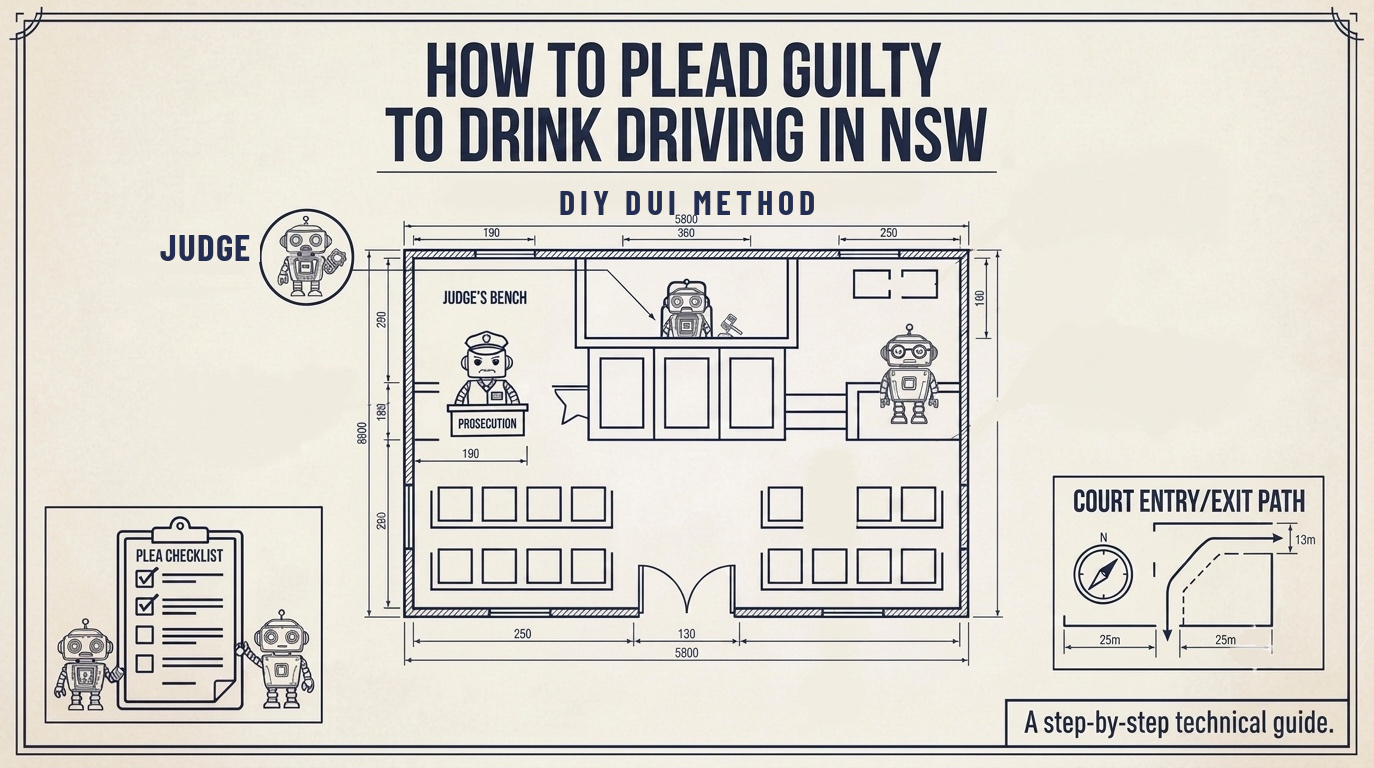
Step 1: First Mention at NSW Local Court
Your Court Attendance Notice will list a date and time for your first court appearance at your local NSW Local Court. At this first mention, your name will be called, you’ll confirm your name, and the Magistrate will ask how you plead.
Most people ask for an adjournment at the first mention. This gives you time to gather character references, write an apology letter, complete a Traffic Offender Program, and prepare your submissions. The Magistrate will usually grant a 4–8 week adjournment for preparation.
Step 2: Sentencing Hearing
On your sentencing date, the court will:
- Confirm your guilty plea — The Magistrate will ask you to confirm you still plead guilty
- Police facts are read — The prosecutor will hand up the police facts sheet outlining what happened
- Your record is tendered — The prosecutor will provide your driving and criminal history
- You address the court — You will speak about your circumstances and hand up your supporting documents
- The Magistrate may ask questions — This is normal and helps them understand your situation
- The Magistrate gives the decision — The penalty is announced and explained
What Penalties Apply When You Plead Guilty in NSW?
The penalty you receive depends on three main factors:
- Your BAC level — Low range (0.05 to less than 0.08), Mid range (0.08–0.149), or High range (0.15+)
- Whether it’s a first or repeat offence — Repeat offences carry significantly higher penalties
- Your personal circumstances — The court considers your background, the steps you’ve taken, and the impact of the penalty
| Offence Category | Max Fine (1st offence) | Licence Disqualification | Interlock |
|---|---|---|---|
| Low Range PCA (0.05 to less than 0.08) | $2,200 | 3–6 months | Not required |
| Mid Range PCA (0.08–0.149) | $2,200 | 6 months minimum (12 months automatic) | Mandatory |
| High Range PCA (0.15+) | $3,300 | 12+ months | Mandatory |
These are general guidelines only. The actual penalty depends on your individual circumstances and how you present your matter to the court.
For detailed penalty information, see our complete guide: NSW Drink Driving Penalties & Laws Explained.
How to Prepare Before Your Sentencing Hearing
The weeks between your first mention and your sentencing hearing are critical. Good preparation can make a genuine difference to your outcome.
1. Complete a Traffic Offender Program
A recognised NSW Traffic Offender Program is one of the most powerful steps you can take before court. Magistrates view these programs very positively because they demonstrate genuine remorse, a commitment to change, and proactive responsibility.
Self-enrolling before court is more powerful than being ordered to complete it afterward. Complete the program before your court date and bring the certificate with you.
2. Gather Character References
Character references help the Magistrate understand who you are beyond this single offence. Aim for 2–4 references from employers, work colleagues, long-term friends, or community leaders.
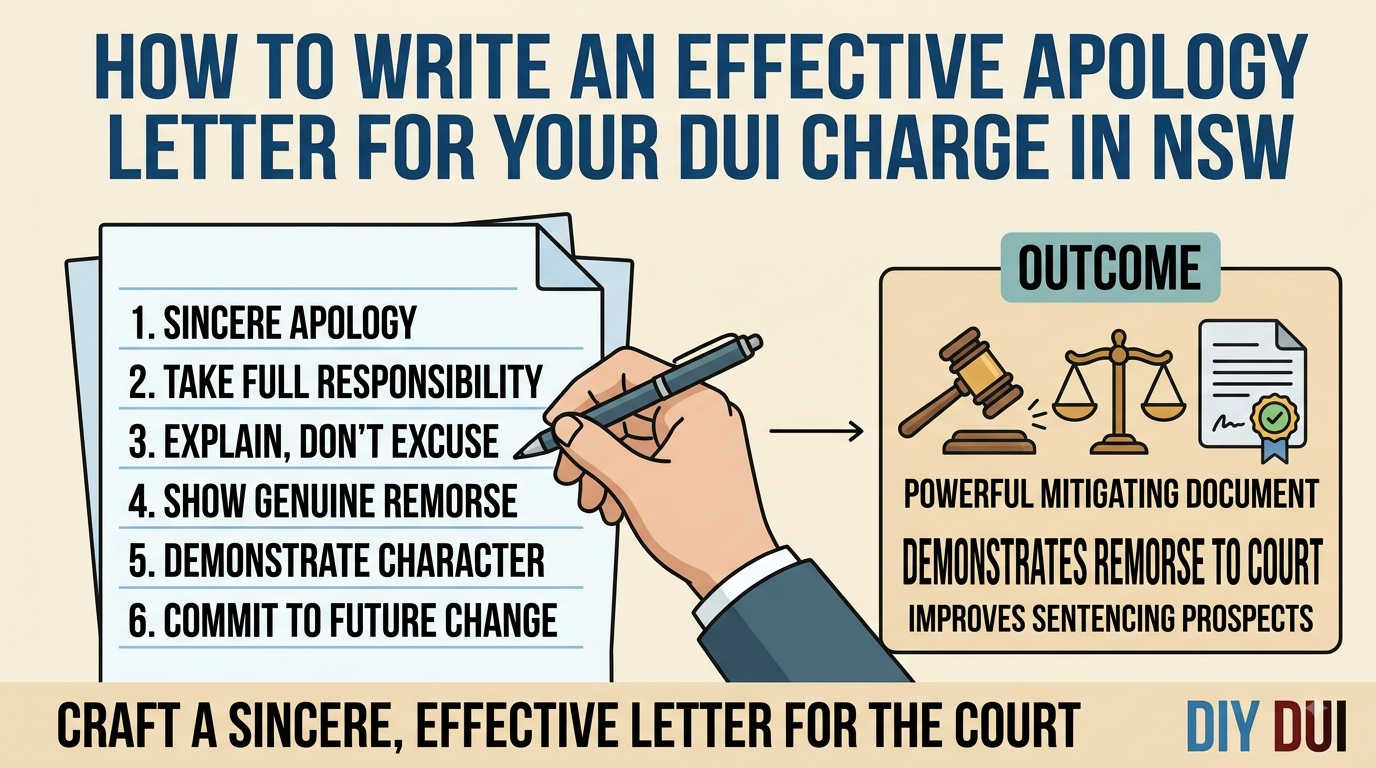
3. Write a Genuine Apology Letter
An apology letter to the court shows remorse and insight. It should accept full responsibility without making excuses, explain what you’ve learned, describe the steps you’ve taken to ensure it won’t happen again, and be written in your own words.
Common Mistakes When Pleading Guilty in NSW
Mistake 1: Turning Up Unprepared
Many people think that because they’re pleading guilty, preparation doesn’t matter. This is wrong. The quality of your preparation directly affects how the Magistrate views your case.
Mistake 2: Making Excuses Instead of Taking Responsibility
Magistrates can immediately tell the difference between genuine remorse and excuses. Accept what you did. Don’t blame stress, bad luck, or circumstances.
Mistake 3: Not Completing a Traffic Offender Program
A traffic offender program certificate is objective evidence that you’ve taken steps to change. Without it, your claim of remorse is just words.
Key Takeaway: Pleading guilty to drink driving in NSW is a serious matter, but it doesn’t have to be a disaster. If you prepare properly, show genuine remorse, and take proactive steps before your court date, you give yourself the best possible chance of a fair outcome.
Frequently Asked Questions
No. Many people successfully represent themselves when pleading guilty to drink driving in NSW. However, you must prepare properly. If your case is complex (repeat offence, aggravating factors, professional licence at risk), legal advice is recommended.
From your first court mention to final sentencing typically takes 4–8 weeks. The actual sentencing hearing usually lasts 10–30 minutes depending on complexity.
Yes. All drink driving offences in NSW carry a mandatory licence disqualification period. The length depends on your BAC level and whether it’s a first or repeat offence.
In some cases, the Magistrate may decide not to record a conviction even though you’ve pleaded guilty. This is called a Section 10 dismissal. It’s not automatic and is not common for drink driving offences, but it may be considered if it’s your first offence, your BAC was low, and you show genuine remorse.
You can apply to the court for a payment plan (time to pay) or request community service instead of a fine. Make this request on the day of sentencing.
Yes, but appeals are complex and have strict time limits (usually 28 days). You should seek legal advice immediately if considering an appeal.
Where to Get Help
Free Legal Advice
- Legal Aid NSW — My Car or Driving Offence
- Law Access NSW — Free telephone legal information: 1300 888 529
- Local Court duty solicitor — Free on-the-day advice (limited availability)
Self-Representation Resources
- NSW Local Court — Representing Yourself
- NSW Local Court — Attending the Local Court
Need Help Preparing for Your NSW Drink Driving Court Appearance?
NSW Local Court — self-represented guilty plea.
The NSW DIY DUI Plea Program provides step-by-step guidance for self-represented defendants who are pleading guilty. Get checklists, templates, and structured preparation support designed specifically for NSW Local Court.
Legal Disclaimer: The information on this page is general in nature and does not constitute legal advice. Laws and penalties can change. Always verify current information with official sources. DIY DUI is an information and preparation resource only.