1st Time Drink Driving Charge in Queensland — What Happens Next
The hours after a drink driving charge in Queensland are disorienting. Police have processed you, you may have had your licence suspended on the spot, and there is a court date on the horizon that feels enormous. You have questions nobody seems to be answering clearly.
Here is the short answer: if this is your first offence and you intend to plead guilty, the Queensland Magistrates Court process is structured and manageable. You will attend court, enter your guilty plea, and either be sentenced on the day or given time to prepare your mitigation materials before returning for a sentencing date. What you do in the lead-up to that sentencing appearance makes a genuine difference to what the magistrate decides.
This guide walks you through the first time drink driving charge process in Queensland — your charge paperwork, the court timeline, the QLD-specific penalties you are facing, and the concrete preparation steps that actually matter. For a broader overview of Queensland drink driving resources, start at the QLD DIY DUI hub.
Your Charge Paperwork — What It Means in Queensland
Queensland drink driving offences are prosecuted under the Transport Operations (Road Use Management) Act 1995 (Qld) (TORUM Act). The documents police hand you after charging are the starting point for understanding exactly what you are facing and when you need to act.
The Notice to Appear or Complaint and Summons
In Queensland, police may charge you by issuing a Notice to Appear or, in some cases, by way of a Complaint and Summons filed with the court. Your charge document will tell you:
- The specific offence you have been charged with, including your blood alcohol concentration (BAC)
- The Queensland Magistrates Court where your matter will be heard
- The date and time of your first court appearance
- Any bail conditions or immediate licence suspension conditions that apply
Failing to appear at your Queensland Magistrates Court date can result in a warrant being issued for your arrest and the matter proceeding in your absence. Do not miss your court date under any circumstances.
Understanding Your BAC Level Under Queensland Law
Queensland categorises drink driving offences by BAC level under the TORUM Act. The category recorded on your charge document determines the penalty tier that applies at sentencing:
- No alcohol limit: 0.00 (learner licence holders, provisional licence holders, and specified vehicle operators)
- General alcohol limit: Over 0.05 (open licence holders — the standard limit)
- Middle alcohol limit: 0.10 and above (open licence holders)
- High alcohol limit: 0.15 and above (open licence holders)
Your BAC level is fixed at the time of the offence. It does not shift at sentencing based on your personal circumstances. Knowing your category tells you immediately which penalty range the magistrate must sentence within.
The Immediate Licence Suspension in Queensland
Under Queensland law, police have the power to issue an Immediate Licence Suspension (ILS) notice at the time of charging for drink driving offences involving a BAC at or above the relevant limit. This suspension takes effect immediately — often from the time of the roadside breath test — and runs until the matter is dealt with in court. You cannot drive during this period. Driving while suspended in Queensland carries additional serious charges that would significantly worsen your situation.
The Queensland Magistrates Court Process — Step by Step
All drink driving matters in Queensland are heard in the Magistrates Court. For a first time offence where you intend to plead guilty, the process generally moves through two stages. Whether your matter is listed in Brisbane or elsewhere in Queensland, the same TORUM Act framework applies — local court preparation (for example, understanding how Brisbane drink driving matters are typically handled) can help you know what to expect on the day.
Stage 1 — Your First Court Appearance
When your matter is first called in the Queensland Magistrates Court, the magistrate confirms your identity, the charge is put to you, and you are asked to enter a plea. On a first-time drink driving charge where you intend to plead guilty, you have two options at this stage:
- Plead guilty and be sentenced on the day — the magistrate will sentence you immediately based on the charge and whatever information is before the court at that moment.
- Plead guilty and request an adjournment — you ask for more time to gather supporting materials, complete a Traffic Offenders Program, and prepare your submissions before returning for a dedicated sentencing hearing.
Take the adjournment. Requesting time to prepare is not a sign of weakness — it is sensible court management. Sentencing on the day with no preparation is one of the most common ways first-time defendants receive penalties toward the top of the range rather than the bottom.
The Adjournment Period
Queensland Magistrates Courts regularly grant adjournments for first-time offenders who need time to complete a Traffic Offenders Program or gather supporting documentation. The adjournment typically adds four to eight weeks to your timeline.
This time is not idle — it is your preparation window. Failing to use it well is the most common and costly mistake first-time defendants make in Queensland.
Stage 2 — Sentencing Day
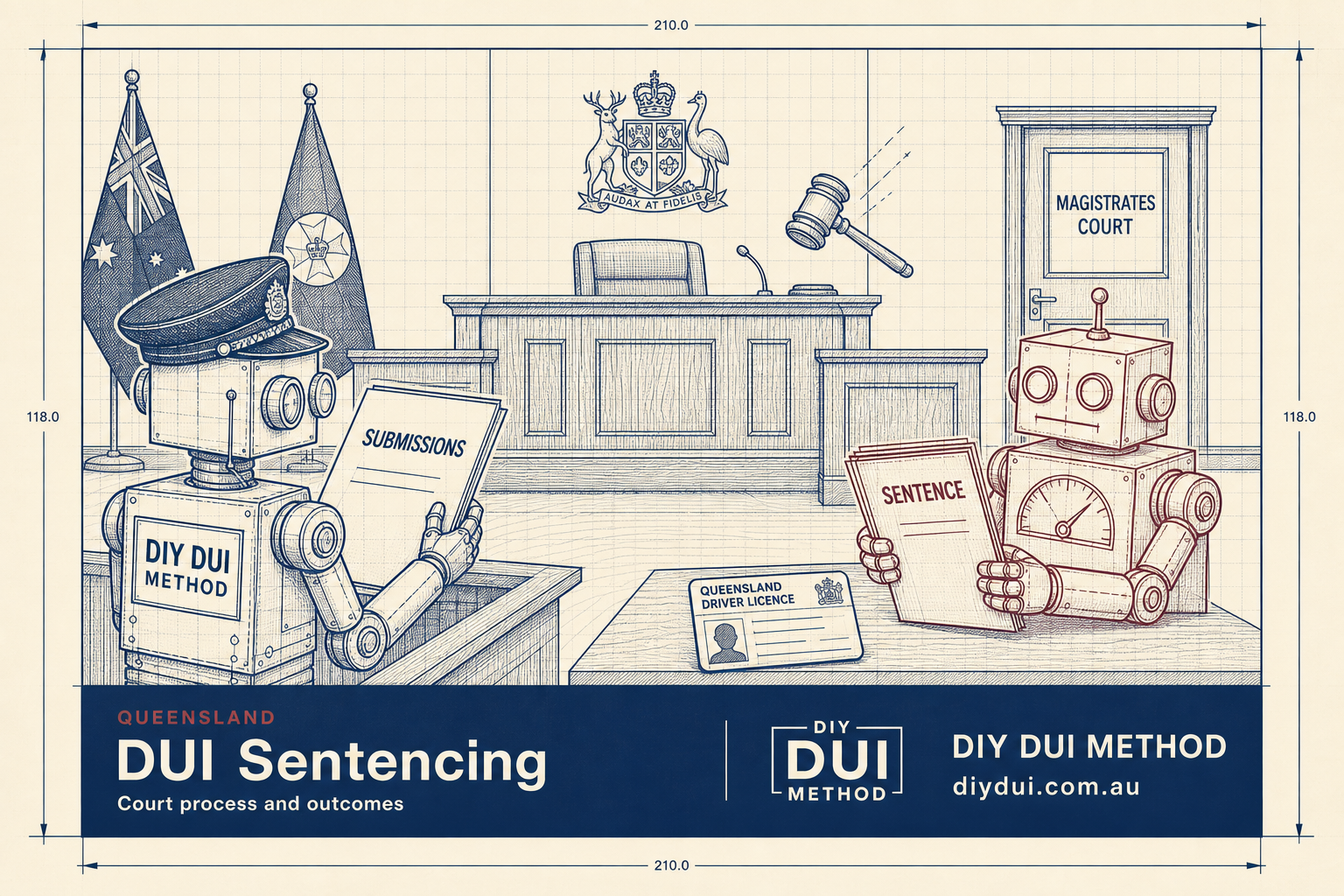
At the sentencing hearing, the police prosecutor reads the facts of the offence to the court. You then have the opportunity to make your submissions — explaining your personal circumstances, your remorse, and the steps you have taken since the charge. The magistrate considers everything before them and imposes a penalty within the statutory range.
Dress neatly, arrive early, and address the magistrate as “Your Honour.” These are small things that cost nothing and communicate that you take the matter seriously.
Queensland Penalties for a First Drink Driving Offence
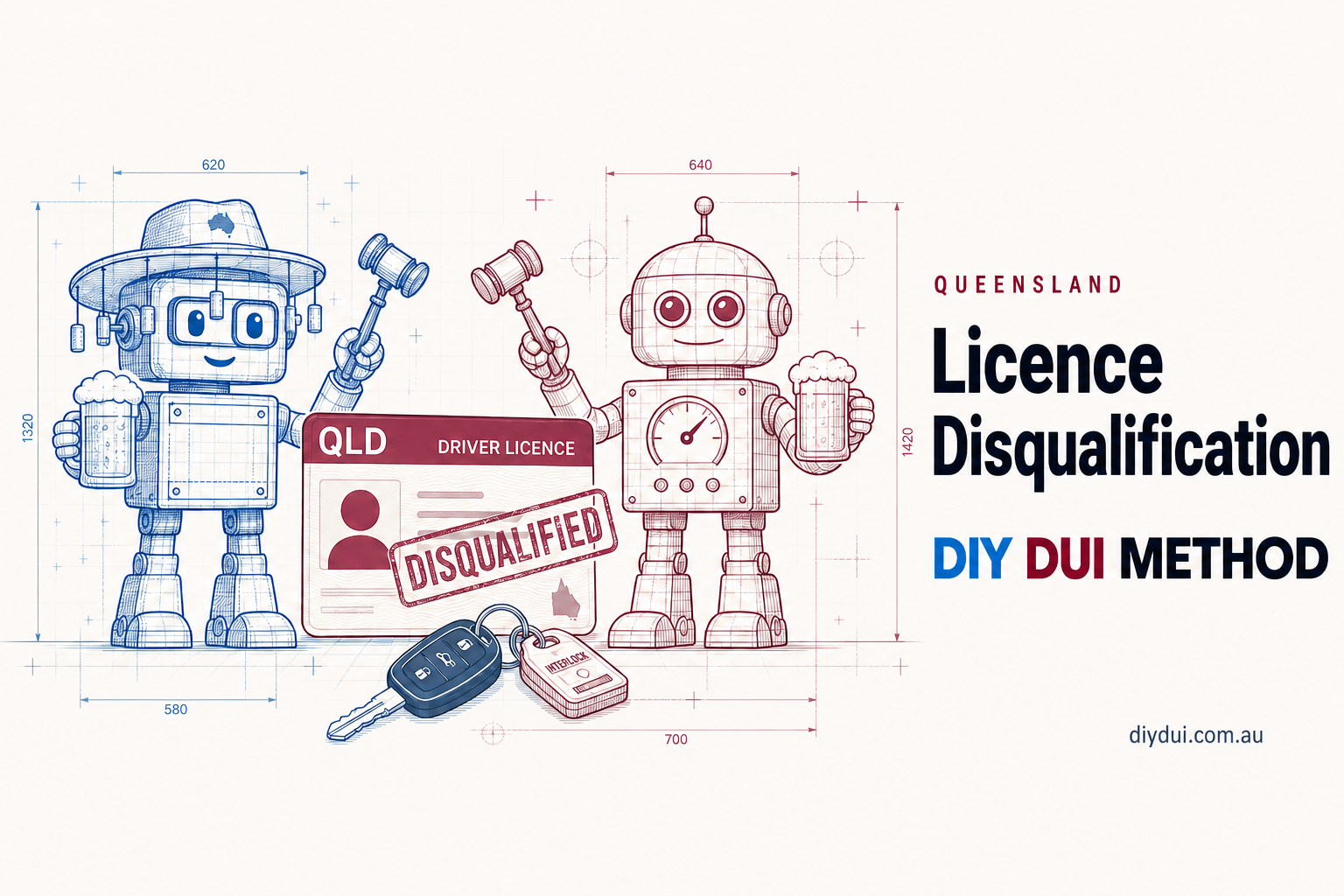
Queensland drink driving penalties are set under the TORUM Act and are calculated using penalty units. The current value of a penalty unit in Queensland is set by the Queensland Government and updated periodically — always verify the current rate at Queensland Legislation or the Department of Transport and Main Roads. The disqualification periods below are mandatory minimums for a first offence. Magistrates have discretion to impose longer periods. For a fuller breakdown of Queensland drink driving penalties and how the ranges work in practice, see also our guide to Queensland drink driving penalties and laws explained.
General Alcohol Limit Offence (Over 0.05 to 0.099) — First Offence
- Maximum fine: 14 penalty units
- Mandatory minimum disqualification: 1 month
- Maximum disqualification: 9 months
- Imprisonment: Not applicable for first offence at this level
Middle Alcohol Limit Offence (0.10–0.149) — First Offence
- Maximum fine: 28 penalty units
- Mandatory minimum disqualification: 3 months
- Maximum disqualification: 12 months
- Imprisonment: Maximum 9 months
High Alcohol Limit Offence (0.15 and Above) — First Offence
- Maximum fine: 60 penalty units
- Mandatory minimum disqualification: 6 months
- Maximum disqualification: Unlimited (at magistrate’s discretion)
- Imprisonment: Maximum 18 months
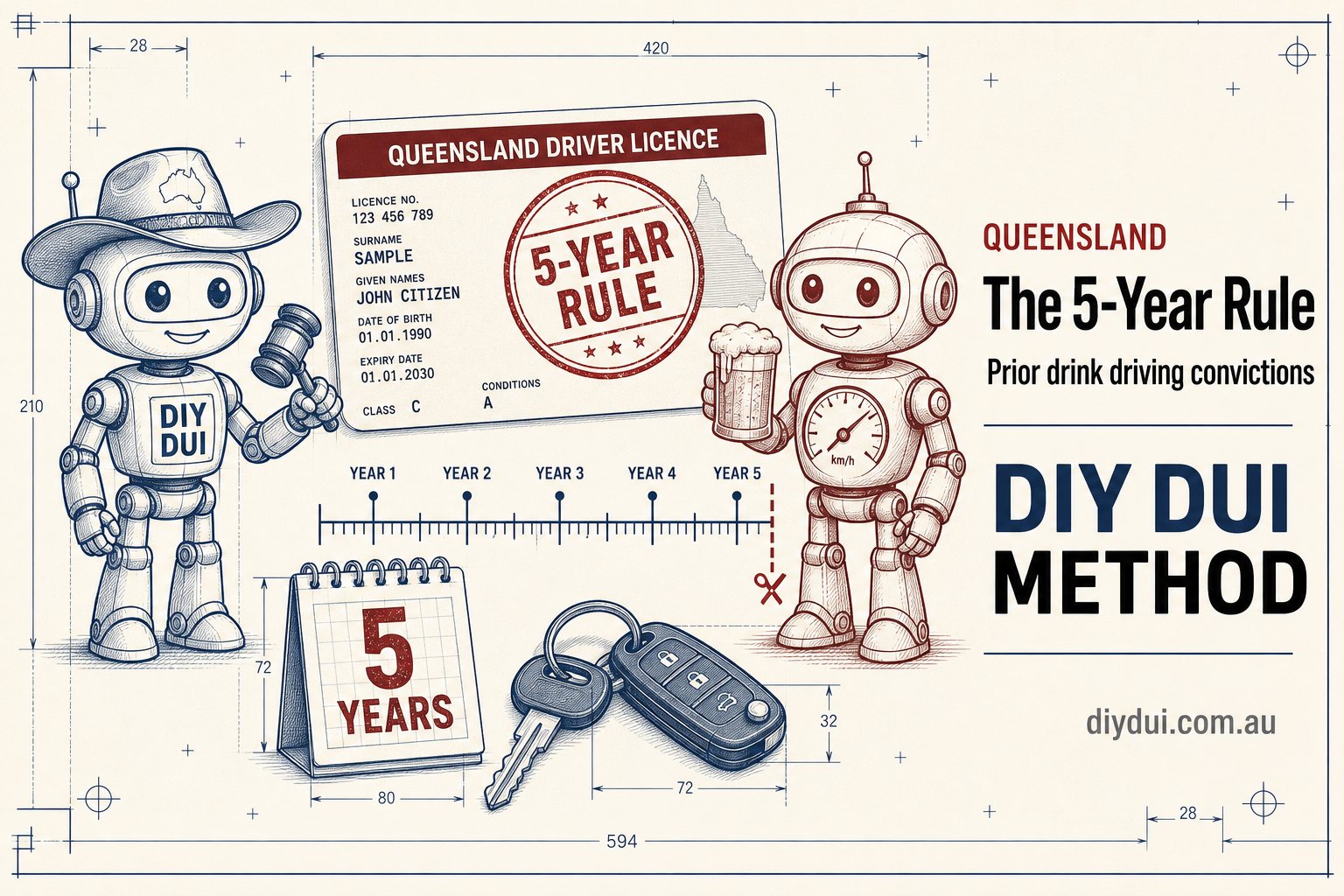
These are the statutory maximums and mandatory minimums. First-time offenders with no prior record and strong preparation consistently receive sentences toward the minimum end of the range. The mandatory minimums are the floor — your preparation determines where above that floor you land. Whether you are treated as a first offender can also turn on prior history within the relevant look-back period — see the Queensland 5-year rule for drink driving for how prior offences are counted.
The Queensland Drink Driving Interlock Program
Queensland’s mandatory alcohol interlock program applies to certain drink driving convictions. Under the program, once your disqualification period ends, you must have an approved interlock device fitted to your vehicle for a set period before you can obtain an unrestricted licence. For drink driving convictions in Queensland, the Department of Transport and Main Roads administers the program — details are available at tmr.qld.gov.au.
What Queensland Magistrates Focus On at Sentencing
Queensland magistrates weigh two categories of factors when sentencing a drink driving offence: the objective seriousness of the offence, and the subjective circumstances of the offender. Understanding this distinction helps you focus your preparation on the areas where you can actually make a difference.
Objective seriousness is fixed by the BAC level and the circumstances of the offence — whether there was an accident, whether other road users were put at risk, and whether there were passengers in the vehicle. You cannot change these facts.
Subjective circumstances are where you have genuine influence. Queensland magistrates consistently respond positively to:
- Completion of a Traffic Offenders Program before sentencing
- Genuine, specific remorse that goes beyond a simple “I’m sorry”
- No prior criminal or traffic history
- Strong character references from credible people who know you well
- Early guilty plea — showing acceptance of responsibility and saving court time
- Licence dependency — where loss of licence threatens employment or essential travel
The Queensland Work Licence — A Critical Additional Step
Queensland has a provision not available in NSW — the Section 87 Work Licence. If your employment genuinely depends on holding a driver’s licence and you meet the eligibility criteria, you may be able to apply to the Queensland Magistrates Court to be granted a work licence that allows you to drive for work purposes during your disqualification period.
A work licence application must be made at the time of your sentencing — you cannot apply after the fact. This means if you are eligible and want to apply, you must have your application properly prepared and filed before your sentencing date.
Work licence eligibility is strict. Not all first-time offenders qualify. There are BAC limits, employment requirements, and procedural steps that must be met. If you think you may be eligible, understanding the requirements early — before your sentencing date — is essential. The QLD Work Licence Program is designed to help eligible applicants prepare that application properly.
Preparation Steps That Make a Real Difference in Queensland
The time between your first court appearance and your sentencing date is where the outcome is shaped. These are the steps Queensland magistrates actually respond to.
Complete a Traffic Offenders Program
Enrolling in and completing an approved Traffic Offenders Program before your Queensland sentencing date is one of the most effective steps you can take. Queensland courts consistently treat completion as concrete evidence that you have acknowledged your behaviour and taken genuine steps toward rehabilitation.
The completion certificate you bring to court on sentencing day directly supports a submission for minimum penalties. Programs typically run six to eight weeks — enrol as soon as possible after your first appearance.
Gather Strong Character References
Two to three strong, specific character references carry more weight than five generic ones. Each reference should be addressed to the magistrate, explain the referee’s relationship to you, and speak to qualities that are directly relevant to sentencing — your responsibility, community ties, and low risk of reoffending.
Write a Genuine Apology Letter
Your apology letter is a direct, written communication to the court. It must be specific — not vague — about what you did, why it was wrong, and what you have done about it. Write it in your own voice. Queensland magistrates read many of these letters and respond to genuine insight, not formula.
Prepare Your Oral Submissions
In the Queensland Magistrates Court, your oral submissions are your direct opportunity to explain your circumstances to the magistrate before they sentence you. Keep your submissions structured and focused on the factors that matter: your prior record, your employment situation, your family responsibilities, your remorse, and the steps you have taken since the charge.
What to Bring on Sentencing Day
- Your Traffic Offenders Program completion certificate
- Your original character references addressed to the magistrate
- Your apology letter
- Proof of employment or evidence of licence dependency, if relevant
- Your completed work licence application and supporting material, if you are applying
- Notes for your oral submissions
Self-Representation in Qld Magistrates Court — Is It Realistic?
For many first-time drink driving matters in Queensland with no aggravating factors — no accident, no children in the vehicle, no refusal to provide a breath or blood sample — self-representation on a guilty plea is a realistic option. Queensland Magistrates Courts see unrepresented defendants regularly. Magistrates respond positively to those who are prepared, respectful, and well-organised.
Legal representation in Queensland for a straightforward drink driving matter typically costs between $2,000 and $5,000. That cost is difficult to justify for many first-time offenders on a matter where a guilty plea is the intended course and there are no complex legal issues in dispute. If you are weighing whether to self-represent or instruct a lawyer, this guide on whether you need a DUI lawyer in NSW or QLD sets out the practical trade-offs.
Key Takeaway: A first time drink driving charge in Queensland is serious — but manageable. The penalties are fixed by statute, but where you land within the range is shaped by how well you prepare. Use every week between now and sentencing day to build the strongest possible picture for the magistrate.
If you intend to plead guilty and want structured preparation for your Queensland sentencing appearance, the QLD Plea Program walks you through the materials magistrates respond to — and you can enrol in the QLD Plea Program when you are ready to start.
Frequently Asked Questions
Will I get a criminal record for a first drink driving offence in Queensland?
Yes. A drink driving conviction in Queensland results in a criminal history entry. Unlike NSW, Queensland does not have a direct equivalent to the NSW Section 10 dismissal — the magistrate must record a conviction for drink driving offences. However, the nature of the conviction, the penalty imposed, and whether it appears on a working with children or national police check depends on specific circumstances. This is general information only — verify your specific situation with an appropriate source.
How long will I be suspended before going to court in Queensland?
If an Immediate Licence Suspension (ILS) was issued at the time of your charge, your licence is suspended from that date until the court makes an order at sentencing. In Queensland, the ILS period counts toward your overall disqualification period in certain circumstances. The exact timeline depends on when your matter is listed for sentencing, which typically runs eight to twelve weeks for first-time matters.
Do I need to complete a Traffic Offenders Program in Queensland?
There is no legal requirement to complete a Traffic Offenders Program before your Queensland sentencing hearing. However, completion is one of the most consistently effective preparation steps available to first-time defendants. Queensland magistrates view it as concrete evidence of rehabilitation and acceptance of responsibility. Enrol immediately after your first court appearance to ensure you have time to finish before sentencing.
Can I apply for a work licence in Queensland?
Possibly. A Section 87 Work Licence under the TORUM Act is available to eligible first-time offenders in Queensland whose employment genuinely depends on holding a driver’s licence. Eligibility criteria include a BAC below a certain threshold, genuine employment dependency, and no prior drink driving history. The application must be made at the time of sentencing — it cannot be made after the fact. If you think you may be eligible, start preparing your application well before your sentencing date.
Can I send a letter instead of attending court in Queensland?
Attending the Queensland Magistrates Court in person is strongly advisable. Written pleas are possible in limited circumstances, but personal attendance demonstrates respect for the court and seriousness about the outcome. Magistrates consistently view personal attendance as a positive signal. Failing to attend when you are capable of doing so can work against you at sentencing.
Will I go to jail for a first drink driving offence in Queensland?
For a first general alcohol limit offence in Queensland, imprisonment is not typically a consideration. For first middle and high alcohol limit offences, imprisonment is a statutory maximum option, but actual custodial sentences for first-time offenders with no prior history on straightforward matters are uncommon. High BAC readings, aggravating circumstances, and prior history all increase the risk. Preparation and mitigation are your primary tools for managing the outcome.
How early should I arrive at the Queensland Magistrates Court?
Arrive at least 30 minutes before your listed time. This gives you time to locate the correct courtroom, confirm with court registry that your matter is listed correctly, and compose yourself before your matter is called. Arriving flustered and rushed creates a poor first impression. Arriving calm and organised creates a positive one.
Important: If your matter is complex, you dispute police facts, or your situation falls outside what this program covers, you should consider speaking with an experienced traffic lawyer.