Queensland Drink Driving Penalties & Laws Explained
Central Coast court appearance? Prepare a strategic submission now.
If you’ve been charged with drink driving in Queensland, you need to understand the exact offence you’re facing and what the legal penalties are. Queensland penalties aren’t one-size-fits-all—they depend on your BAC level, your driving history, and your circumstances. This guide breaks down Queensland drink driving law so you can understand what you’re dealing with.
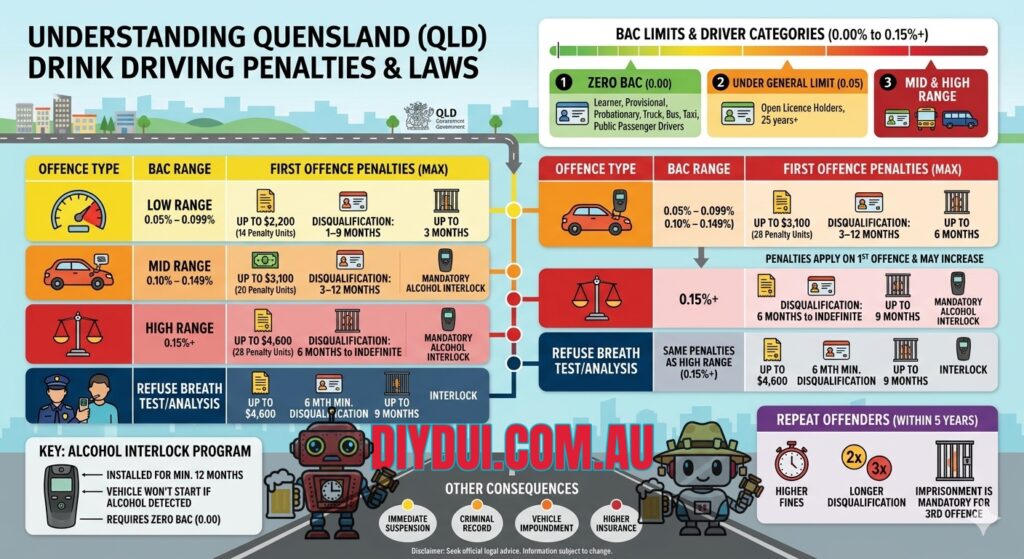
Queensland has three main drink driving offences, divided by BAC level. Each carries different penalties, and repeat offences are treated much more seriously than first offences. The magistrate will use these laws to decide your sentence.
QLD Drink Driving Offences — The BAC Categories
Under the Transport Operations (Road Use Management) Act 1995 (Queensland), drink driving is divided into three categories based on your blood or breath alcohol concentration.
Low Range (0.050–0.099)
A Low Range offence means your BAC was between 0.050 and 0.099. This is the most common drink driving charge in Queensland.
For a first low-range offence, the maximum penalty is a fine of $2,167 and licence disqualification of between 1 and 9 months. Imprisonment for up to 3 months is possible but unlikely for a first offence without aggravating circumstances.
Special drivers: If you held a learner or provisional licence at the time, your limit is zero BAC—so even a small amount of alcohol can be an offence. Professional drivers (taxi, bus, truck drivers) must stay under 0.02 BAC. If you held one of these licence types, penalties may be more severe even at low-range BAC levels.
Mid Range (0.100–0.149)
A Mid Range offence means your BAC was between 0.100 and 0.149. This is considered moderate-level drink driving.
For a first mid-range offence, the maximum penalty is a fine of $3,096 and licence disqualification of between 3 and 12 months. Imprisonment for up to 6 months is possible, especially if there are aggravating circumstances like an accident, speeding, or carrying passengers.
The magistrate is more likely to impose jail time for mid-range offences than for low-range, particularly if it’s a repeat offence or if the circumstances were serious.
High Range (0.150 and above)
A High Range offence means your BAC was 0.150 or higher. This is the most serious drink driving offence.
For a first high-range offence, the maximum penalty is a fine of $4,334 and licence disqualification of a minimum 6 months. Imprisonment for up to 9 months is possible. The magistrate is more likely to impose jail time for high-range offences, especially for repeat offenders.
Mandatory interlock: High-range and repeat drink drivers are likely to be ordered into the Queensland Alcohol Ignition Interlock Program. An interlock device is fitted to your car and requires a breath sample before the car starts. If alcohol is detected, the car won’t start. Interlock periods run 12+ months and cost $2,000+ to install, service, and remove.
Penalty Ranges — First Offence vs Repeat Offence
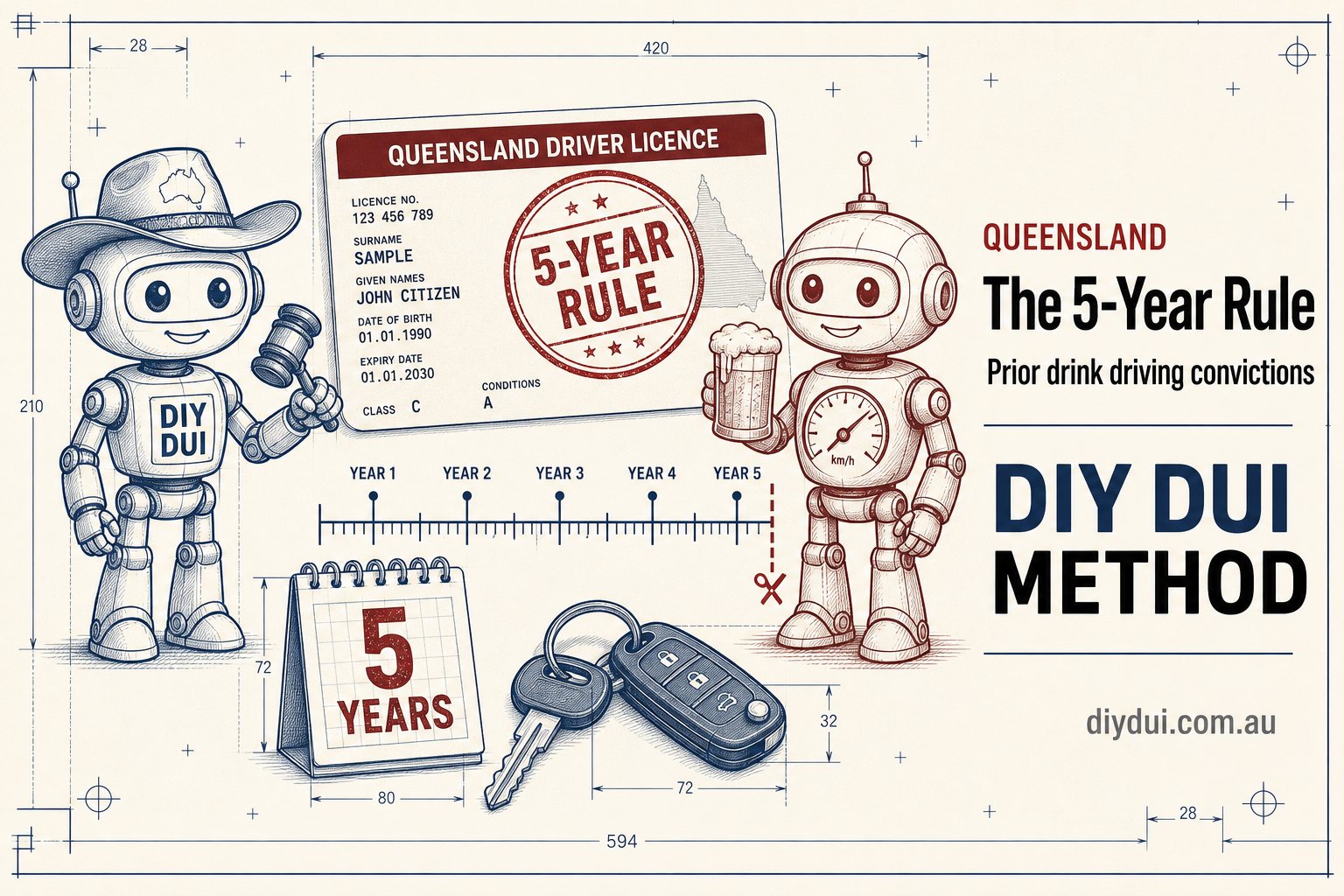
Queensland law treats repeat offenders much more harshly. A “repeat” offence is a second or subsequent drink driving conviction within 5 years.
Repeat Low Range: Maximum fine of $2,889, licence disqualification of 3 to 12 months minimum, and mandatory participation in the Alcohol Interlock Program for a minimum 12-month period.
Repeat Mid Range: Maximum fine of $4,334, licence disqualification of 6 months to 3 years, and mandatory participation in the Alcohol Interlock Program for up to 24 months. Imprisonment for up to 9 months is possible.
Repeat High Range: Maximum fine of $5,778, licence disqualification of 1 to 3 years, and mandatory participation in the Alcohol Interlock Program for up to 24 months. Imprisonment for up to 12 months is possible.
Important note: If you’re convicted of a second drink driving offence within 5 years, the Alcohol Interlock Program becomes mandatory. You cannot avoid it (unless you qualify for a medical exemption, which is rare).
The clear message: if you’ve been convicted of drink driving before, any new offence will result in significantly harsher penalties.
Licence Disqualification in Queensland
Licence disqualification is mandatory for all drink driving offences in Queensland. You cannot escape it. The question is only how long.
The magistrate must disqualify you for a minimum period (which depends on your BAC and history) but has discretion to impose longer periods. They’ll consider your personal circumstances, the seriousness of the offence, your driving history, and whether you’re a repeat offender.
Disqualification starts from the date of sentence unless the magistrate specifies a later date. Sometimes they’ll order that disqualification begins after 28 days, giving you time to arrange alternative transport.
What disqualification means: You cannot legally drive a car during the disqualification period. If you’re caught driving while disqualified, that’s a separate serious offence with additional penalties, including potential jail time.
Early licence application: In Queensland, you may be able to apply for restoration of your licence after serving half the disqualification period in limited circumstances. This is complex. Most people serve the full disqualification period.
Work licence alternative: If you’re disqualified and your work depends on driving, you can apply for a section 87 restricted work licence. This allows you to drive for work purposes only during disqualification. Eligibility has strict criteria, and applications require a hearing before the magistrate. See our dedicated section 87 work licence guide for details.
The Queensland Alcohol Ignition Interlock Program
The Alcohol Ignition Interlock Program is administered by the Department of Transport and Main Roads. It’s a device-based program that monitors your alcohol consumption if you’re allowed to drive.
Who must participate?
The interlock program is mandatory for: all second and subsequent drink driving offences (any BAC level) within 5 years; all mid-range offences (0.100+); and all high-range offences (0.150+).
How the device works: An interlock device is fitted to your car’s ignition system. Before the car will start, you must provide a breath sample via a mouthpiece. If your BAC is below the threshold (typically 0.02), the car starts. If alcohol is detected, the car won’t start and the device records the attempt.
Random testing: Even after the car starts, the device may require additional breath samples at random times while you’re driving. You must provide these samples while the car is in motion. Failure to comply results in a breach of the interlock order.
Other drivers: Anyone else driving your car must also provide a breath sample with zero alcohol. This includes family members and friends borrowing your vehicle.
Camera monitoring: The device includes a built-in camera that takes a photo of you when you provide the breath sample. This is for verification and record-keeping purposes.
Program duration: The interlock program runs for a minimum of 12 months, with a performance period of the last 4 months. During the performance period, no alcohol must be detected on any breath sample, and you must not be permanently locked out of the device due to missed servicing.
Servicing requirements: The device must be serviced regularly: the first service is after 1 month, then every 3 months thereafter. You must keep these appointments—missing servicing results in a breach of the program.
Cost: You pay for the interlock. Installation costs around $400-600. Servicing (every 3 months) costs $80-150. Removal costs $100-200. A 12-month program can cost $2,000-$3,000. Some providers offer payment plans.
Exemptions: You can apply for an exemption from the interlock program if: you live in a significantly remote area (more than 150km from an interlock installer); you have a medical condition preventing you from providing a breath sample; or participating would cause you severe hardship. Exemptions are rare and require strong evidence.
The Queensland Traffic Offenders Program
The Traffic Offenders Program is a voluntary, court-recognized educational program. It’s not mandatory, but completing it shows the magistrate that you’re taking drink driving seriously.
What is it? TOP is a road safety and driver education program. It includes lectures by specialists: driver safety experts, emergency service workers (paramedics, police), alcohol and drug counsellors, and grief/trauma specialists. The program focuses on the consequences of driving under the influence, including crash risks, injuries, legal penalties, and impact on victims.
For drink driving specifically: The program covers how alcohol affects driving (slower reaction times, impaired concentration, distorted speed perception), legal consequences, and strategies to avoid driving under the influence. Counsellors explain the science of alcohol impairment.
Format and availability: TOP offers both in-person and online formats. There are many diferent program around ranging from approximately $150 to $300. Different program has varying program formats and times in which to complete them.
Court benefit: Completing TOP before your court date is a strong mitigating factor. The magistrate will consider it evidence that you’ve engaged with the seriousness of your offence and taken steps to address your driving behavior. Bring your certificate to court.
Timing: In order to have the desired mitigation applied to your court case then the program should be completed prior to attending Court.
What Courts Consider on Sentence
Once you’ve pleaded guilty, the magistrate’s focus is sentencing. They’ll consider several factors:
The BAC level. Higher BAC is more serious. 0.160 is treated more seriously than 0.051.
Your driving history. First offence vs repeat offence makes a huge difference. Any prior convictions (traffic or otherwise) may be considered.
Age and experience. A young, inexperienced driver may be treated differently than a mature driver with decades of clean driving. Age alone isn’t decisive, but it’s a factor.
Employment and personal circumstances. If your job depends on your licence, the magistrate will consider this when setting disqualification length (though won’t eliminate it). Family responsibilities, health issues, sole carer status—these all matter.
Aggravating circumstances. Did you cause an accident? Were there passengers, especially children? Were you speeding? Was it late night or peak hour? Aggravating factors push sentences higher.
Your response after the charge. Have you completed QTOP? Engaged with a counsellor? Completed a driver education course? Sought treatment for alcohol issues? These show genuine remorse and responsibility.
Aggravating and Mitigating Factors
Aggravating factors (that increase severity):
- Causing an accident or injuring someone
- Driving in a school zone, residential area, or heavy traffic area
- Speeding or other traffic violations at the time
- Carrying passengers, especially children
- Late-night or early-morning driving
- Refusing a breathalyser test
- Previous traffic convictions or breaches of the law
- Very high BAC (0.20+ is significantly worse than 0.150)
Mitigating factors (that can reduce severity):
- First offence with excellent driving record
- Early guilty plea (showing remorse)
- Completion of driver education or alcohol awareness course (especially QTOP)
- Engagement with professional counselling or alcohol treatment
- Strong character references
- Your licence is essential for work or caring responsibilities
- Steps taken since the charge to address the problem
- Financial hardship (in some cases)
The magistrate will balance these factors when setting the sentence. If you have strong mitigating evidence, bring it to court.
How to Prepare — What Actually Helps Your Case
You can’t change the BAC result. But you can significantly influence the sentence through preparation.
Complete the Traffic Offenders Program. Do QTOP before court if possible. This directly shows the magistrate you’re addressing the issue. The certificate is powerful evidence.
Seek professional help if alcohol is an issue. See your GP or a counsellor and get a letter confirming engagement. This shows responsibility and active steps.
Gather character references. Get 1-3 strong letters from your employer, community figures, or people who know you well. Aim for quality over quantity.
Document your employment situation. If your licence is essential for work, get a letter from your employer confirming this. Include your employment contract or payslips showing you drive. This matters for disqualification decisions.
Be honest about your circumstances. If you have caring responsibilities, health issues, or financial hardship, explain this clearly. The magistrate can’t help if they don’t know.
Prepare a brief court statement. Know what you want to say in 5-10 minutes. Explain the context, show remorse, and outline steps you’ve taken. Practice so you’re calm and clear.
Frequently Asked Questions About Queensland Drink Driving Penalties
Q: Can I drive during my disqualification period? A: No. Disqualification means you cannot legally drive a car, period. There’s no “work exception.” You need to find alternative transport. If caught driving while disqualified, you face a separate serious offence with additional penalties, including jail time.
Q: What if I’m a repeat offender—is it worse? A: Yes, significantly worse. If you’ve been convicted of drink driving within the last 5 years, any new offence results in much harsher penalties: longer disqualification, mandatory interlock, and higher fines. The legislation treats repeat offenders very seriously.
Q: Will my insurance cover me after a drink driving conviction? A: Probably not. Most insurers exclude cover for driving under the influence. After a conviction, your premiums will increase dramatically or you’ll be uninsurable. Disclose the conviction to your insurer immediately.
Q: What if the magistrate orders interlock—can I avoid it? A: You can apply for a medical or hardship exemption, but these are rare and require strong evidence. If you’re ordered into the program, you must comply. Breaches (missed servicing, driving with alcohol detected) result in further penalties.
Q: How much will the interlock program cost me? A: Installation is $400-600. Servicing every 3 months is $80-150. Removal is $100-200. For a 12-month program, you’re looking at $2,000-$3,000. Some providers offer payment plans. The cost is your responsibility.
Q: Can I get a restricted work licence instead of full disqualification? A: Yes, you can apply for a section 87 work licence if you meet the eligibility criteria (QLD only). You must demonstrate that you need to drive for work and that disqualification would cause genuine hardship. Not everyone is eligible. See our dedicated work licence guide for details.
Q: Will a conviction affect my employment? A: Possibly. If your job involves driving (truck driver, courier, taxi, delivery), a conviction and disqualification will almost certainly affect your employment. Even non-driving jobs may have disclosure policies. Check your employment contract and notify your employer as required.
Q: How long does a drink driving conviction stay on my record? A: In Queensland, a drink driving conviction stays on your criminal record. After 10 years (for a first offence), you may be able to apply to have it removed, but it remains on official records. For employment and licensing purposes, it’s permanent.
Q: Can I appeal the magistrate’s sentence? A: Yes, you can appeal to the District Court, but appeals are difficult, expensive, and rarely succeed. You’d need to show the sentence was manifestly excessive or based on an error of law. Seek legal advice if you’re considering this.
Q: What happens if I was driving under the influence of drugs instead of alcohol? A: Drug driving is a separate offence under the Transport Operations Act. Penalties are similar to alcohol drink driving. If you were charged with drug driving, consult a lawyer—the defences and nuances are different.
Q: Can the magistrate send me to jail? A: For a first low-range offence, jail is unlikely. For mid-range, high-range, or repeat offences, jail is possible. The magistrate will consider your circumstances. If jail is a real possibility based on your BAC and history, seek legal advice before court.
Q: What if I wasn’t actually over the limit but the test said I was? A: If you dispute the breath test result or the police procedure, you should plead not guilty and seek legal advice. Don’t plead guilty to a fact you disagree with. This is a legal issue that requires proper assessment by a lawyer.
Safety Notice
If your matter is complex, you dispute police facts, or your situation falls outside what this program covers, you should consider speaking with an experienced traffic lawyer.
Build Your Best Case for Qld DUI Court Matters
QLD DUI Court Preparation
Prepare structured submissions that demonstrate genuine accountability and responsibility to the magistrate.
✓ Instant access · ✓ Built for self-represented defendants · ✓ QLD court-specific
Start the DIY DUI Program
QLD + Work Licence
Disclaimer: The information on this page is general in nature and does not constitute legal advice. Laws and penalties can change. Always verify current information with official sources. DIY DUI is an information and preparation resource only.