NSW Drink Driving Court — What to Expect When You Plead Guilty
Overview
Pleading guilty to drink driving in NSW means a Local Court sentencing hearing. This guide walks through the Court Attendance Notice, what happens on the day, and how to prepare. It is general information, not legal advice, and it does not promise a result.

You’re Not Alone — Here’s What Happens
If you’ve received a Court Attendance Notice for drink driving in NSW, you might feel anxious, overwhelmed, or uncertain about what comes next. That’s completely normal. Most people have never been to court and don’t know what to expect. The good news is that understanding the process — step by step — makes the experience far less frightening and helps you walk in feeling prepared and in control.
This guide explains what happens from the moment you receive your notice all the way through to sentencing day. It’s written for people who have decided to plead guilty to their drink driving charge and want to prepare properly without hiring a lawyer.
From Charge to Court Listing — What Happens First
When you’re charged with drink driving in New South Wales, police will give you a Court Attendance Notice (CAN). This document tells you:
- What you’ve been charged with (the offence category and BAC level)
- Which Local Court you must attend
- The date and time of your first court appearance
- Your own details (name, address, driving licence number)
The CAN is your official summons. It means you must attend court on the date listed. Ignoring a CAN can lead to additional charges and a warrant for your arrest.
Attend court in person. Your physical presence at court demonstrates respect for the process and shows the magistrate you take the matter seriously. This is important for sentencing.
The Guilty Plea Process in NSW Local Court
Once your matter reaches court, the magistrate will ask whether you intend to plead guilty or not guilty.
If you plead guilty, you’re accepting the facts as the prosecution puts them forward and acknowledging the offence. The magistrate will then move straight to sentencing. This is your opportunity to tell the court about your circumstances — your job, your family, any steps you’ve taken since the offence (like completing a Traffic Offenders Program), and why the court should consider a lenient sentence.
Many people ask: Can I change my plea later? Yes, but only if you file a change of plea form at least 48 hours before your next court date. After that deadline, changing your plea becomes much harder.
The benefit of an early guilty plea is that courts reward early acceptance of responsibility. This can result in a lighter sentence compared to someone who waits or contests the charge initially.
What Happens on the Day of Court
Arriving at the Courthouse
Get there early — at least 30 minutes before your scheduled time. Local Court lists move quickly, and security queues can be long. Bring your licence (unless police already took it), your Court Attendance Notice, and any supporting documents.
When you arrive, find the court officer (usually near the courtroom or in the foyer) and tell them:
- Your name
- That you are unrepresented (you don’t have a lawyer)
- That you intend to plead guilty (if that’s your decision)
The court officer will make sure you’re in the right courtroom and know when you’ll be called.
If you’re concerned or have questions about procedure, a Legal Aid NSW Duty Lawyer is available at court. You can speak to them for free advice before your matter is called. This is especially useful if you think you might go to prison or if you’re unsure about your plea.
Inside the Courtroom
When your name is called, stand up. You’ll approach the front of the court and stand in the dock or at a designated area.
The magistrate (or the prosecutor on behalf of the magistrate) will ask: “Do you plead guilty or not guilty to the charge?”
If you plead guilty, answer clearly: “Guilty, Your Honour.”
The prosecutor will then outline the police facts — what the police say happened. This will include:
- When and where you were stopped
- Your breath or blood alcohol reading
- Whether there were any aggravating circumstances (like speeding, a crash, or passengers)
- Your driving record
The magistrate may ask you questions about the facts. If you disagree with anything the prosecutor says, tell the magistrate now. You can give your version of events, but do this calmly and respectfully.
When You Speak
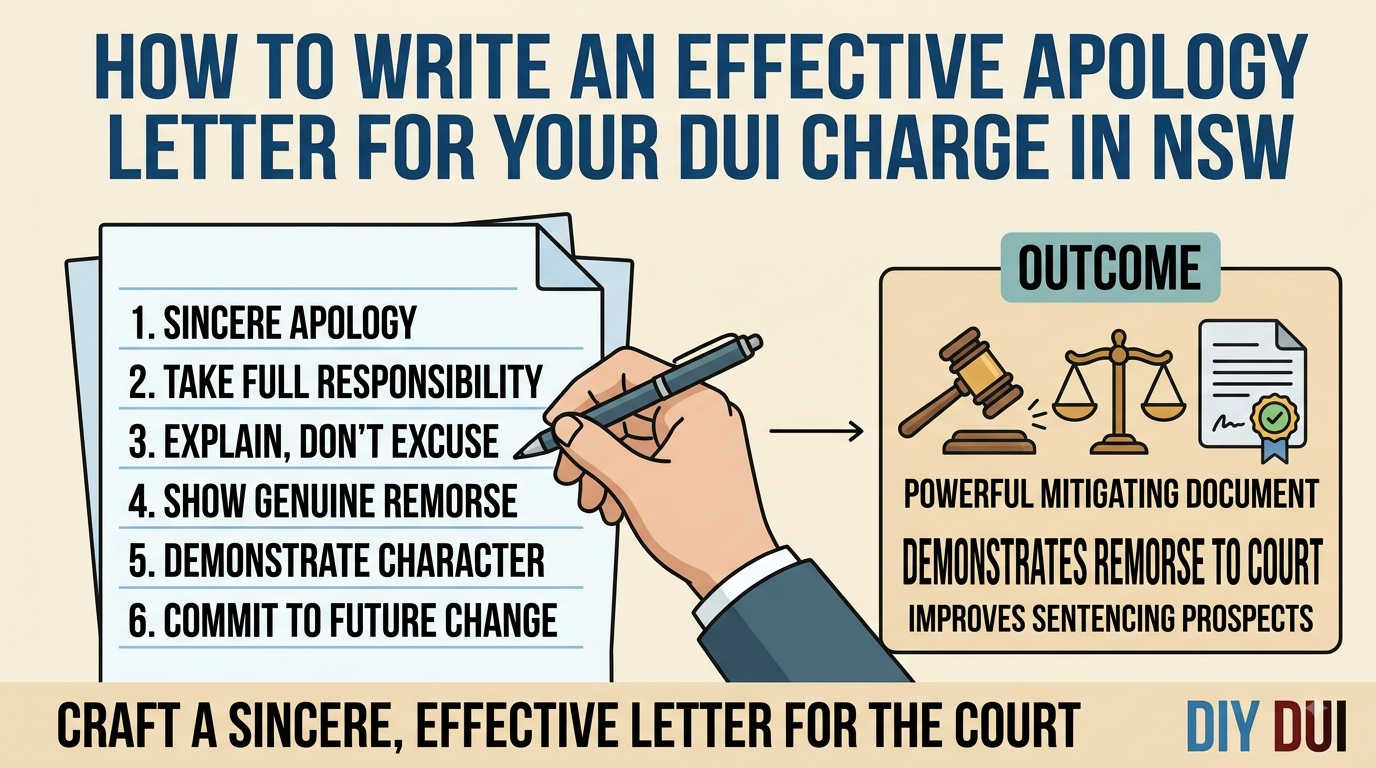
After the facts are presented, the magistrate will give you an opportunity to speak. This is your chance to tell the court about yourself and why they should take a lenient approach to sentencing.
What to say:
- Acknowledge what you did wrong
- Show remorse (genuine, not forced)
- Explain any personal circumstances relevant to sentencing (job, family, health, caring responsibilities)
- Describe any steps you’ve taken since the offence (counselling, Traffic Offenders Program, reduced drinking)
- Explain the hardship the disqualification will cause you
- Outline your plan to avoid reoffending
What not to say:
- Don’t make excuses for why you drove
- Don’t blame others
- Don’t minimize drink driving as “not that serious”
- Don’t argue with the police facts if you’ve already pleaded guilty
Speak clearly, make eye contact with the magistrate, and keep it brief (2–3 minutes is usually enough). If you’ve prepared written references or a letter, hand them to the court officer and ask to present them. After you’ve finished, the magistrate will consider the facts, your circumstances, and the law. They’ll then announce the sentence.
What Magistrates Focus On When Sentencing
Magistrates don’t sentence arbitrarily. They consider specific factors required by law. Understanding these helps you prepare material that addresses each one.
Blood Alcohol Level
The higher your reading, the more serious the offence. A low-range PCA (0.05 to less than 0.08) is less serious than a mid-range (0.08–0.149) or high-range (0.15+). The court will refer to this throughout.
Your Driving Record
A clean driving record supports a more lenient sentence. If you’ve had prior drink driving offences in the last five years, the penalties jump significantly — this becomes a “second or subsequent offence” under the law, with mandatory minimum disqualification periods.
Circumstances of the Offence
Was this a random breath test on a quiet road, or were you speeding, involved in a minor crash, or driving at night with passengers? The court considers the risk you posed to others and yourself.
Remorse and Insight
Does the court believe you genuinely understand how serious drink driving is? Have you taken steps to address the problem? Have you completed a Traffic Offenders Program? Have you sought counselling or reduced your alcohol intake?
Personal Circumstances
Does losing your licence put you in genuine hardship? Are you the sole carer for a dependent? Does your job depend on a licence? The court can consider these factors, but they won’t outweigh the seriousness of the offence.
Rehabilitation Steps
The more you’ve done since the offence, the better. Completing a Traffic Offenders Program, getting a character reference from your employer, and demonstrating stable employment or family ties all help.
Documents and Materials to Bring
Bring originals (or certified copies) of:
- Your Court Attendance Notice
- Your driving licence (if you still have it)
- Character references (from employer, family member, or community member — 2–3 is enough)
- Certificate from any Traffic Offenders Program you’ve completed
- Evidence of counselling or treatment if relevant (e.g., alcohol awareness course)
- Medical reports if relevant (doctor’s letter explaining any health factors)
- Employment letter confirming your job and whether losing your licence affects your work
- Any letter you’ve written to the court explaining your circumstances
Don’t bring originals of private medical records or anything too personal. Keep it professional and focused on what’s relevant to sentencing.
A Note on Magistrate Variability
Different magistrates may approach sentencing differently, even for similar offences. One magistrate might be stricter than another, or might weight particular factors differently. This doesn’t mean the system is unfair — it reflects that sentencing involves judgment, not just formulas. What it means for you: prepare thoroughly, present your best case, and trust that the magistrate will apply the law fairly to your circumstances.
Frequently Asked Questions About NSW Drink Driving Court
Q: Will I definitely get a criminal record?
Not necessarily. In rare cases, a magistrate can sentence you under Section 10 of the Crimes (Sentencing Procedure) Act — a “non-conviction order” — which means no criminal record is recorded. However, this is uncommon for mid-range or high-range offences. For low-range first offences, it’s more likely.
Q: How long will my licence be disqualified?
It depends on your BAC level and whether you’re a first or repeat offender. Low-range first offences: 6 months automatic, which the court can reduce to 3 months. Mid-range first offences: 3–6 months, then the mandatory interlock period. High-range: 6–9 months first offence, 9–12 months repeat (plus mandatory interlock). The magistrate can vary these, but only with good reason.
Q: What’s an alcohol interlock order?
An interlock device is installed in your vehicle. It requires you to provide a breath sample (zero reading) before the car will start. You’re only allowed to drive vehicles with an interlock fitted. For mid-range and high-range offences, interlock orders are now mandatory. They typically last 24 months for a first high-range offence.
Q: Can completing a Traffic Offenders Program reduce my sentence?
Yes. If you complete an approved program and present a certificate to the court, it demonstrates responsibility and insight. The court can factor this into sentencing. However, the program costs money (typically $200–$500), so only do it if you genuinely believe it will help and can afford it.
Q: What if I disagree with the police facts?
Even if you plead guilty, you can dispute certain facts. Tell the magistrate what you disagree with. However, if you strongly dispute the facts, you might want to consider a not-guilty plea and a defended hearing (which is outside the scope of the DIY DUI guilty plea program). Speak to a duty lawyer if you’re unsure.
Q: What happens if I can’t pay a fine?
You can ask the magistrate about a payment plan. The court can allow you to pay over time. If you’re on a Centrelink benefit, you can apply for financial hardship consideration.
Q: Can I appeal my sentence?
Yes, you can appeal to the District Court if you believe the sentence is unjust. However, appeals are complex and require legal advice. This is outside the scope of a self-representation program.
Q: Will the magistrate send me to prison?
Imprisonment is not available for a low-range offence. For a first mid-range offence without serious aggravating factors, imprisonment is unlikely. For high-range offences, a first-time offender typically won’t receive full-time custody, but it’s possible. If you think there’s any chance you could go to prison, speak to the duty lawyer at court before your matter is called.
Key Takeaway: Understanding what happens in court transforms the experience from frightening to manageable. You’ll know the procedure, know what to expect, and know what the magistrate is listening for. Preparation — bringing documents, thinking through what you want to say, and understanding the factors the magistrate considers — makes a measurable difference.
Important: If your matter is complex, you dispute police facts, or your situation falls outside what this program covers, you should consider speaking with an experienced traffic lawyer.
Ready to Prepare for Court?
Walking into the NSW Local Court calm, organized, and prepared changes the outcome.
The NSW DIY DUI Plea Program gives you a complete, step-by-step guide to everything covered in this article — plus tools to help you organize your documents, draft your submissions, gather references, and plan your court day.
Legal Disclaimer: The information on this page is general in nature and does not constitute legal advice. Laws and penalties can change. Always verify current information with official sources. DIY DUI is an information and preparation resource only.