Section 87 Work Licence QLD: Am I Eligible?
Overview
A Queensland section 87 restricted work licence lets some people drive for work during a court disqualification if they meet the statutory eligibility tests. This guide sets out who can apply and who is automatically ineligible. It is general information, not legal advice, and it does not promise a result.
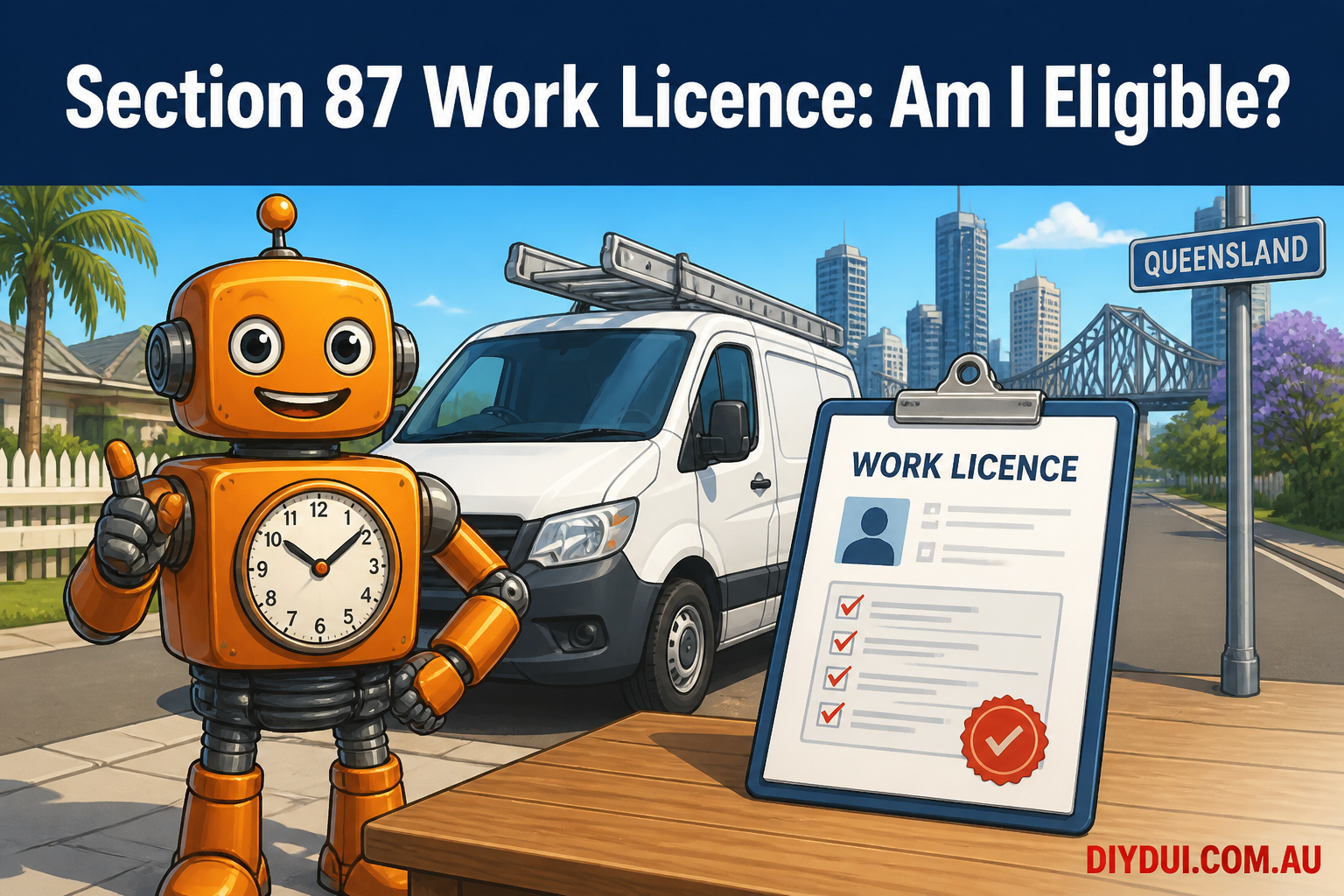
If you’ve been disqualified from driving after a drink driving conviction and your job depends on your ability to drive, you might be wondering: can I still drive to and from work? The answer might be yes—if you meet the eligibility criteria for a section 87 restricted work licence. This guide sets out exactly who can apply and who is automatically ineligible.
A section 87 work licence allows you to drive during your disqualification period, but only for work purposes. It’s a lifeline if you’re facing losing your job because of your licence loss. But it’s not available to everyone. Understanding the eligibility criteria now will help you know whether it’s an option for you.
What Is Section 87 of the Transport Operations Act?
Section 87 of the Transport Operations (Road Use Management) Act 1995 (Queensland) is the law that allows magistrates to issue restricted work licences to people who are disqualified from driving.
The section exists because the law recognizes that not everyone who commits a drink driving offence should be prevented from driving entirely during their disqualification. Some people genuinely need to drive for work, and their disqualification causes genuine hardship. Section 87 balances the need to punish the offence with the need to allow some people to continue working.
However, the law is strict about who is eligible. It’s not available to repeat drink drivers, it’s not available to high-range offenders, and it requires you to demonstrate genuine hardship. Understanding these limits is important.
The Six Eligibility Criteria — DUI Work Licence Explained Simply
To be eligible for a section 87 work licence, you must satisfy six criteria. All six must be met. If you fail even one, you’re ineligible.
1. You must hold a Queensland licence
At the time you were charged with drink driving, you must have held a Queensland class C open licence (or another category that allows car driving, such as class D, which includes cars). This is a standard car driving licence.
If you only held a truck licence, motorcycle licence, or a restricted licence, you’re ineligible. If you held an interstate licence and weren’t a Queensland resident, you may have issues. The law requires a Queensland open-class licence.
What if your licence was already suspended or cancelled at the time? You need to have held a valid licence at the time of the offence. If your licence had been cancelled before you were charged (for example, for a previous drink driving offence), you can’t apply. The spirit of section 87 is to allow people with a valid licence to keep driving for work—not to restore licences to people who’ve already lost them.
2. You must need to drive for work
This is more specific than “I have a job.” You must demonstrate that your job actually requires driving.
What counts as genuine work-related driving need? Examples include: you’re a tradesperson who visits multiple job sites; you’re a delivery driver or courier; you’re a sales representative who visits clients; you’re a taxi or rideshare driver; you’re a rural worker who drives stock; you manage multiple properties. In all these cases, the job literally cannot be done without driving.
What doesn’t count? If your workplace is at one fixed location and you just need to get there, that’s different. You can arrange alternative transport (another driver, public transport). If you work from home, you don’t need to drive for work. If your job doesn’t require driving (e.g., office-based, retail), you’re ineligible.
The key is: does your job inherently require you to drive, or is driving just your method of getting to work? If it’s the latter, you can find another way to get there. If it’s the former, you might be eligible.
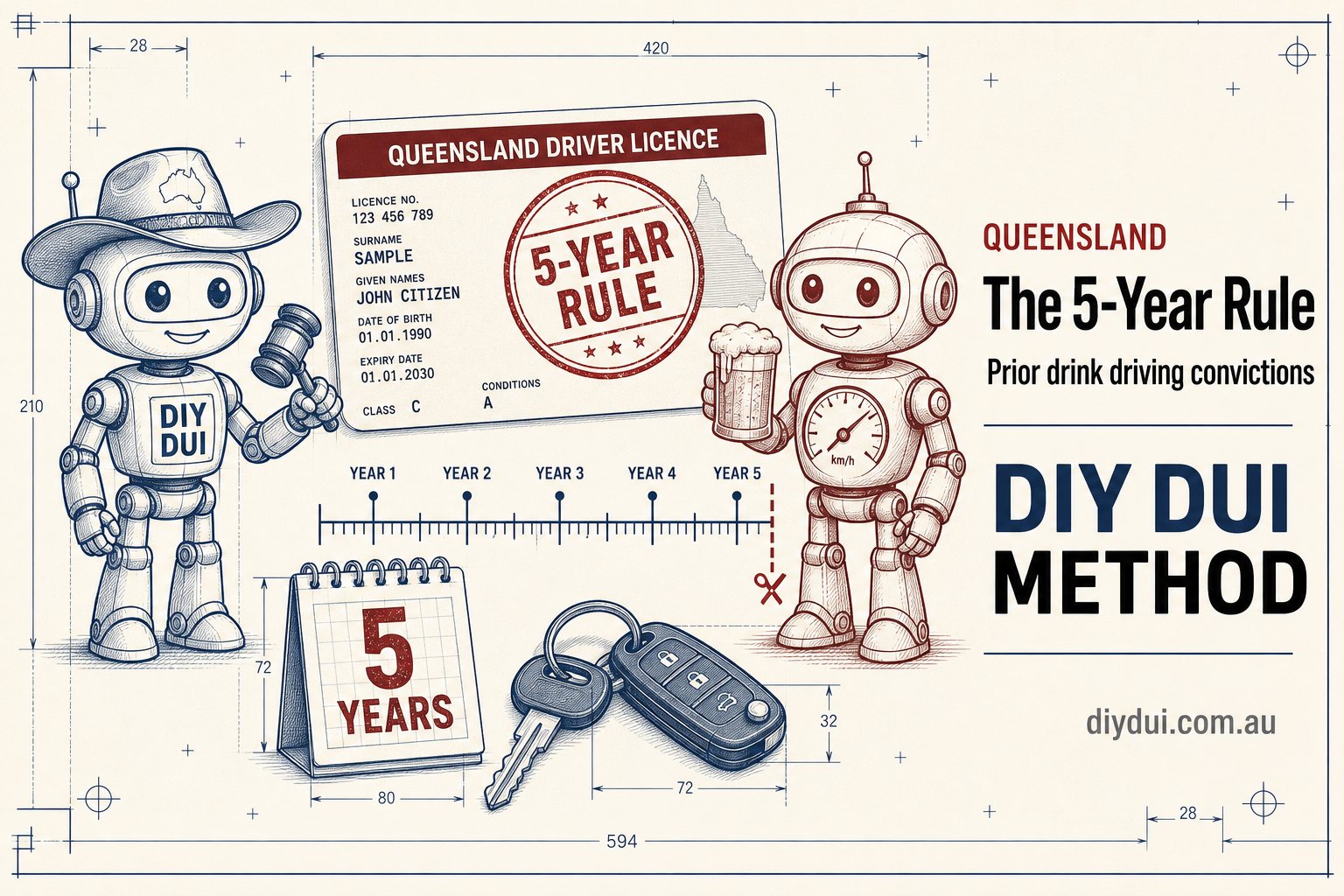
3. You must not be a repeat drink driver (within 5 years)
This is an absolute bar. If you have a prior conviction for drink driving (or related offences) within 5 years of your current charge, you are automatically ineligible.
What counts as a prior drink driving conviction? Any conviction for driving with a prescribed concentration of alcohol (PCA), driving under the influence of drugs, or refusing to provide a breath sample within the last 5 years.
How is the 5 years calculated? Five years from the date of your current conviction (or the date your charge is laid). If you were convicted of drink driving 4 years and 11 months ago, you’re ineligible. If it was 5 years and 1 month ago, you’re eligible.
What if the prior conviction was a dismissed charge or a section 10 order (no conviction recorded)? A section 10 dismissal means no conviction was recorded, so it doesn’t technically count as a prior conviction for the purposes of the 5-year rule. However, if you were found guilty (even if no conviction was recorded), it may still count. This is a technical legal question—seek advice if you’re in this situation.
The 5-year rule is rigid. The magistrate has no discretion. If you’re a repeat drink driver, you cannot get a work licence under section 87.
4. Public transport must not be a viable alternative
The magistrate will consider whether you could reasonably get to work using public transport instead of driving.
What makes public transport viable? A bus, train, or other service that runs at the times you need to work, that gets you reasonably close to your workplace, and that is affordable. If you can catch a bus to your workplace at 7 AM and get home at 5 PM, and that bus is reliable and costs a reasonable amount, public transport might be viable.
What makes it not viable? If there’s no service at the times you work (e.g., you work early mornings or nights, and there’s no bus service then); if the service is unreliable; if it requires multiple transfers that make you very late for work; if your work requires you to carry tools or equipment that can’t fit on public transport; if public transport costs more than you can afford; if you work in a rural area with no service.
The magistrate’s perspective: They’ll look at objective facts. They might check public transport schedules for your area. If a bus genuinely runs at the right times, even if it’s inconvenient, the magistrate may decide public transport is viable. You need to show specific, concrete reasons why it doesn’t work for you.
If you’re arguing that public transport isn’t viable, gather evidence: screenshots of public transport schedules, timetables, information about service gaps, costs, reliability issues (delays, cancellations). Bring this to your application hearing.
5. Genuine hardship must result from disqualification
You must demonstrate that disqualification would cause genuine hardship to you or your family.
What counts as genuine hardship? Loss of income that prevents you from meeting essential needs: paying rent, feeding yourself or your dependents, paying medical costs, meeting loan repayments. If you’re a sole earner for your family and your job depends on your licence, that’s genuine hardship.
What doesn’t count? Mere inconvenience or loss of lifestyle. “I won’t be able to go to the gym” or “I’ll have to catch the bus” isn’t genuine hardship. “I’ll lose my job and won’t be able to pay rent and my kids need to eat” is.
Financial hardship is strongest evidence. If losing your licence means losing your job, and losing your job means you can’t pay your bills, that’s clear genuine hardship. Bring evidence: a letter from your employer saying you’ll lose your job if you can’t drive, payslips showing your income, bank statements or rent agreements showing your essential expenses.
Non-financial hardship can also count. If you’re a sole carer for a family member, or you have specific health needs that require regular travel, those might constitute genuine hardship. But these are harder to establish than direct financial hardship.
The magistrate needs to believe that disqualification would genuinely harm you, not just inconvenience you. Be specific and honest about what hardship you’d face.
6. You must be a fit and proper person
This is subjective, but it generally means: you’ve shown remorse for the drink driving offence; you’re not a repeat offender; you’re unlikely to reoffend; and you’ll comply with the conditions of the work licence.
How do you demonstrate this? Through your conduct since the charge: Have you completed the Traffic Offenders Program? Have you engaged with counselling or alcohol treatment? Have you been transparent and honest about the offence? Have you taken steps to address any alcohol issues? Have you maintained a clean driving record since the charge (no traffic offences)?
What undermines this? If you show no remorse, if you blame others for the offence, if you’ve had additional traffic offences since the charge, or if you seem dishonest, the magistrate will decide you’re not a “fit and proper person.”
This criterion is subjective—it depends on how the magistrate perceives you and your credibility. Being honest, showing genuine remorse, and demonstrating steps you’ve taken since the charge all help.
Who Is Automatically Ineligible?
Certain categories of people are automatically ineligible for a section 87 work licence, regardless of their circumstances. If any of the following apply to you, stop reading—you cannot get a work licence under section 87.
You were driving at high-range BAC (0.150+) when charged. This is an absolute bar. The law assumes high-range offenders are too serious to get a work licence. Even if you meet all other criteria, if your BAC was 0.150 or higher, you’re ineligible. There’s no discretion, no appeal (for the eligibility question—you can appeal the conviction itself, but that’s different).
You have a prior drink driving conviction within 5 years. As explained above, this is automatic disqualification from work licence eligibility.
You were driving a vehicle that didn’t qualify. If you were driving a truck, bus, articulated vehicle, B-double, road train, vehicle carrying dangerous goods, tow truck, pilot or escort vehicle, public passenger vehicle, taxi, limousine, specially constructed vehicle, or driver training vehicle, you’re ineligible. The section 87 scheme only applies to people driving standard vehicles (cars, vans, utes).
You were driving in the course of employment. This seems counterintuitive, but if you were driving a work vehicle or driving as part of your employment duties at the time of the offence, you’re ineligible. For example, if you were a professional driver (taxi, delivery) and were driving your work vehicle when you were charged, you’re ineligible. However, if you were driving your own car and you were off-duty or going to work, you may be eligible.
You didn’t hold the correct licence for the vehicle. If you were driving a truck but only had a car licence, or you were driving a class RE vehicle but didn’t have the right endorsement, you’re ineligible.
You had already been subject to a restricted licence. If you’d already received a work licence or restricted licence for a previous offence, and you commit another offence, you’re ineligible for a new work licence.
What “Need to Drive for Work” Actually Means
This criterion trips up a lot of people, so it deserves extra explanation.
The question is not: “Do you drive to work?” The question is: “Does your job require driving?”
Job that requires driving: You’re a plumber who visits client homes, and you carry tools and equipment. You cannot do your job without driving from site to site. This is a need to drive for work.
Job where you happen to commute by car: You work in an office. You drive to the office because you live far away and the bus takes too long. But the job itself doesn’t require driving—you could find another way to get there (carpool, move closer, etc.). This is not a need to drive for work.
The law is asking: is driving an essential part of your job, or is it just your commute method?
Grey areas: Some jobs are in a grey area. A manager who works in one office but occasionally travels to other branches might argue they need to drive for work (the travel is work-related). But if those trips are rare, or if they could take a company car with another driver, the magistrate might disagree. Be prepared to explain the specific nature and frequency of your work-related driving.
Self-employed tradies and service providers: If you’re self-employed (plumber, electrician, cleaner, landscaper, etc.), your need to drive for work is usually clear. You need to travel to different client locations. Make sure your affidavit explains the work clearly.
Rural workers: If you work in agriculture, stock management, or other rural industries where properties are spread across large distances and public transport is unavailable, your need to drive for work is clear.
Self-Employed Applicants — What You Need to Show
If you’re self-employed, the work licence eligibility criteria apply equally, but the evidence burden is different.
You can’t write an affidavit from yourself confirming you need to drive for your own business—that’s considered self-serving. Instead, gather objective evidence:
Business registration documents: Show that you’re registered as self-employed or operating a business.
Tax returns or income tax notices: Demonstrate that your business is your primary income source.
Client letters or invoices: If clients confirm they rely on you to travel to them, that’s strong evidence. “We require Jane to attend our property weekly for landscaping maintenance” is powerful evidence of a need to drive for work.
Business bank statements: Show that your income depends on your business continuing to operate.
Evidence of work locations: Show that your work requires travel (maps showing multiple job sites, photos of properties you service, etc.).
A letter from a business accountant or other third party: If your accountant, business mentor, or a client can write a letter confirming that your business depends on driving, that’s very credible.
The key is: use third-party evidence. Don’t just tell the magistrate—show them.
What Happens If You’re Ineligible?
If you don’t meet the eligibility criteria, you cannot get a section 87 work licence. Full stop. The magistrate has no discretion.
Your alternatives are limited:
Serve your disqualification period. The most straightforward option. Arrange alternative transport, or find a job that doesn’t require driving. This isn’t ideal, but it’s your legal obligation.
Arrange another driver. If your employer (or someone else) can provide a driver, your business can continue without you driving. This isn’t always practical, but it’s a possibility.
Appeal your conviction. If you believe the conviction itself is unfair or based on incorrect facts, you can appeal to the District Court. This is expensive and difficult, and it’s a different legal process from the work licence application. Only consider this if you genuinely dispute the facts of the case.
Ask for a variation of the disqualification period. In limited circumstances, after your conviction, you can ask the magistrate to vary (shorten) your disqualification period if genuine hardship has emerged since sentence. This is a different application from a work licence and has a high threshold. Seek legal advice if you want to pursue this.
Frequently Asked Questions About Section 87 DUI Work Licence Eligibility
Q: If I’m only just over the 5-year mark for a prior conviction, am I eligible?
The rule is “within 5 years.” If your prior conviction was exactly 5 years ago (to the day), you’re on the boundary. The safest interpretation is that you are now eligible (outside the 5-year window). However, dates can be calculated differently (date of conviction vs. date of charge). Confirm the exact dates with the Magistrates Court before applying. Seek legal advice if you’re uncertain.
Q: What if my job could theoretically be done from home, but my employer requires me to come to the office?
If your employer requires you to physically attend an office, and you need to drive there, you need to demonstrate that alternative transport truly isn’t viable. If an office job can be done from home for that employer (even if they currently require attendance), the magistrate might see this as a choice by the employer, not a genuine necessity. You’re in a weaker position than a tradesperson whose job cannot be done remotely.
Q: I’m the managing director of a company. Do I need to drive for work?
Not necessarily. If you manage a company but don’t personally drive to client meetings or between work sites, you might not have a genuine work-related need to drive. If you do visit multiple offices or sites in your role, you might. Be specific about your actual work duties.
Q: What if I work casual hours that don’t align with public transport?
If your work hours are outside normal public transport times (e.g., you work 5 AM to 10 AM, before buses run), that’s strong evidence that public transport isn’t viable. Bring evidence: a letter from your employer confirming your hours, public transport timetables showing no service at those times.
Q: My disqualification period is short (only 3 months). Do I still need a work licence?
Legally, yes. If you’re disqualified, you cannot drive—even for a day. If your disqualification is short and you can manage without driving for that period, you might choose not to apply. But if you need to drive, you’ll need a work licence regardless of how short the period is.
Q: Can I get a work licence if I’m self-employed but my income is low?
Income level alone doesn’t matter. What matters is whether driving is essential to your business. A self-employed person with low income who genuinely needs to drive for their work is still eligible. Conversely, a self-employed person with high income whose business doesn’t require driving isn’t eligible.
Q: If I meet all the eligibility criteria, will the magistrate definitely grant my application?
No. Meeting eligibility criteria means you can apply. But the magistrate still has discretion about whether to grant it. They’ll consider: your credibility and remorse; whether you genuinely need the licence; whether you’re likely to comply with conditions; and whether issuing the licence would undermine the purpose of the disqualification penalty. You must present a strong, honest case.
Q: Can I apply for a work licence if I’m appealing my conviction?
This is complicated. Normally, you should wait for your appeal to be decided. If you apply for a work licence while appealing, you’re accepting the conviction for the purposes of that application. Seek legal advice about the interaction between your appeal and a work licence application.
Important: If your matter is complex, you dispute police facts, or your situation falls outside what this program covers, you should consider speaking with an experienced traffic lawyer.
Check Your Eligibility. Prepare Your Application.
Queensland section 87 restricted work licence.
The QLD DIY DUI Plea + Restricted Work Licence Program helps you determine your eligibility and prepare a strong application for a Section 87 work licence.
Start the QLD DIY DUI Plea + Restricted Work Licence Program
Disclaimer: The information on this page is general in nature and does not constitute legal advice. Laws and penalties can change. Always verify current information with official sources. DIY DUI is an information and preparation resource only.