Drink Driving Court QLD: What to Expect | DIY DUI
If you have never been to court before, the thought of walking into a Queensland Magistrates Court for a drink driving charge can feel overwhelming. You might be picturing something from a television drama — a packed courtroom, a stern judge, a formal trial. The reality is quite different, and far more manageable than most people expect.
This article walks you through exactly what happens at a drink driving court in Queensland, from the moment you receive your Notice to Appear to the moment the Magistrate imposes your sentence. It covers the step-by-step order of events, what the Magistrate actually focuses on, what you need to bring, and what most people who represent themselves get wrong.
The short answer: In Queensland, drink driving matters are heard in the Magistrates Court as simple offences. You will attend, confirm your guilty plea, the police prosecutor will present the facts, and you will be given an opportunity to make submissions before the Magistrate sentences you. The whole process — if you are prepared — can be completed on your first court date.
Preparation is not optional. How organised, composed, and remorseful you appear in court has a direct impact on your disqualification period, your fine, and — if you are eligible — whether you receive a restricted work licence.
Not sure which DIY DUI program applies to you?
DIY DUI Method has programs for both NSW and Queensland. If you are in Queensland and rely on your licence for work, the QLD + Work Licence program may be the right fit.
From Charge to Court — What Happens First
When Queensland Police charge you with drink driving, they will issue you a Notice to Appear. This document sets out your court date, the time you must be there, and the location of the Magistrates Court where your matter will be heard.
As a general rule, you will be required to appear at the Magistrates Court closest to where the offence occurred. You can find your nearest Queensland Magistrates Court at courts.qld.gov.au.
If you were charged with mid-range or high-range drink driving — meaning a BAC of 0.10 or above — your licence will have been immediately suspended at the time of charging. That suspension remains in place until your court date. Under the Transport Operations (Road Use Management) Act 1995 (Qld) (the TORUM Act), this is not discretionary. It applies automatically.
What most people do not realise at this stage
Your first court date is not automatically your sentencing date. It is usually called a first mention — a check-in. If you are prepared and ready to plead guilty with all your documents, many courts will finalise the matter on that day. If you need more time — for example, to apply for a restricted work licence — the matter will be adjourned to a later date.
Missing your court date is serious. Failing to appear will result in a warrant being issued for your arrest and additional legal complications. Put the date in your calendar and set multiple reminders.
The Guilty Plea Process in Queensland
Drink driving is classified as a simple offence under Queensland law. This means it is dealt with entirely in the Magistrates Court. There is no jury. There is no District Court involvement. It is heard and decided by a Magistrate.
The vast majority of people charged with drink driving in Queensland plead guilty. When you plead guilty, you are admitting to the charge and to the facts contained in the QP9 — the police court brief. That is why it is essential to read your QP9 carefully before you enter your plea. If you want to understand the full guilty plea process step by step before your court date, the QLD DIY DUI Plea Program covers everything from QP9 review through to sentencing day preparation.
What is a QP9?
The QP9 is the police prosecution document prepared for your matter. It contains the official version of events, your BAC reading, any admissions you made, and your traffic and criminal history. You will receive a copy from the police prosecutor when you arrive at court on your first appearance. Read every line. If anything is factually wrong — particularly in your traffic history — raise it before you enter your plea. A guilty plea is an admission to the facts as written, not just to the charge.
What Happens on the Day of Court
Arriving at the Courthouse
Arrive early — at least 30 minutes before your listed time. Courts typically run from 8:30am or 9:00am, but your matter will not be called immediately. There will be many matters listed on the same day.
When you arrive, locate the police prosecutor’s table or the court registry. Introduce yourself as an unrepresented defendant. The police prosecutor will provide you with your QP9. Read it. If you have questions about the facts, now is the time to raise them — before the matter is called.
What most people do not realise about the order of call
Courts follow a convention where legally represented defendants are generally heard before self-represented defendants. If you are representing yourself and pleading guilty, you may wait a significant period before your matter is called. Bring water. Be patient. Do not leave the courthouse.
Dress neatly. You do not need a suit, but you should look respectful and serious. Switch your phone off completely — not just to silent. Remove hats and sunglasses inside the building.
Inside the Courtroom
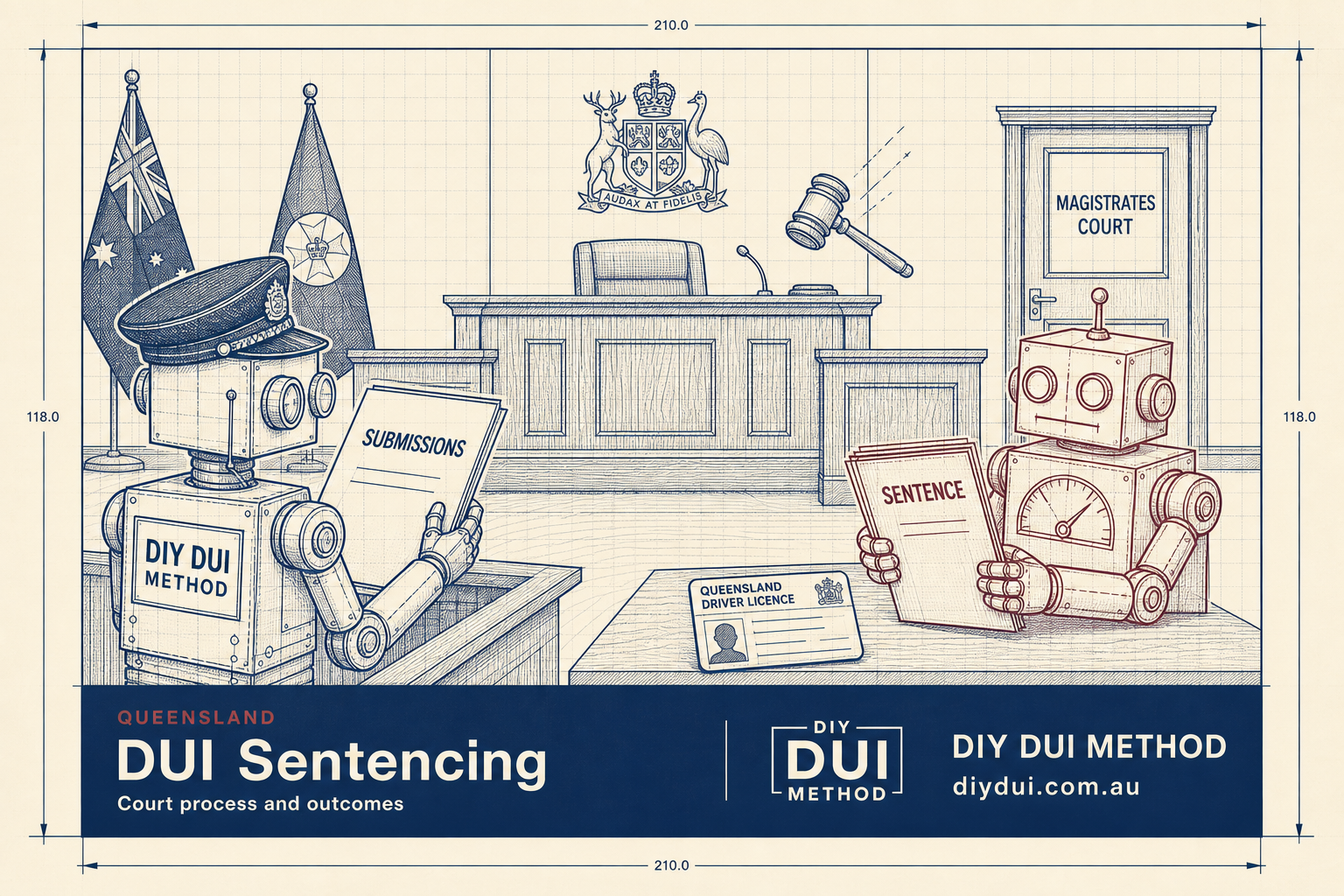
When your name is called, approach the bar table — the table facing the Magistrate’s bench — and identify yourself. The process will generally follow this order:
- The Magistrate reads the charge
- You are asked how you plead
- You confirm your guilty plea
- The police prosecutor reads the outline of facts aloud and hands up the QP9, breath certificate, and your traffic and criminal history
- You are invited to make submissions
- The Magistrate imposes sentence
⚠️ Critical timing — restricted work licence
If you intend to apply for a restricted work licence, you must flag this before the Magistrate imposes a disqualification. Once you are disqualified, it is too late. Raise it at the first opportunity — ideally at your first mention, before any plea is entered.
When You Speak
This is the most important part of the process for anyone representing themselves. Your submissions to the Magistrate should cover three things:
1. Remorse and responsibility. Acknowledge the danger your conduct posed to other road users. Do not minimise it. Genuine, direct accountability is far more effective than justification.
2. Steps you have already taken. Have you completed a Traffic Offenders Program? Have you voluntarily sought counselling? Have you put practical steps in place to prevent reoffending? Tell the court. Bring evidence where you can. If you are eligible and need to apply for a restricted work licence at the same time, the QLD DIY DUI Plea + Restricted Work Licence Program includes the full affidavit preparation framework and eligibility checker for the Section 87 application.
3. Impact of disqualification. If losing your licence will cause you or your family genuine hardship — particularly if your employment depends on driving — tell the Magistrate clearly and specifically. Concrete, documented hardship carries weight. Vague statements about inconvenience do not.
What Magistrates Focus On
Queensland Magistrates sentence drink driving matters daily. They have heard every set of facts and every mitigation submission. What they are genuinely looking for is specific and consistent.
Under the TORUM Act, the Magistrate must impose a period of disqualification for every drink driving conviction — there is no discretion on that. What they do have discretion over is how long, the amount of any fine, and — for low and mid-range offenders — whether to grant a restricted work licence.
Key factors a Magistrate will weigh include your BAC level, whether this is a first or repeat offence, your traffic and criminal history, evidence of genuine remorse, steps taken since the offence (including completing a Traffic Offenders Program, counselling, or an alcohol-free period), the impact of full disqualification on your employment and family, the quality of your written materials, and your conduct and demeanour in court.
The thing most self-represented defendants underestimate
Organisation signals credibility. A defendant who arrives with a well-structured set of documents — character references, a remorse letter, a Traffic Offenders Program certificate, and employment evidence — makes a fundamentally different impression than someone who turns up and improvises.
Penalty Ranges for First-Time Drink Driving in Queensland
The following maximum penalties apply for a first-time drink driving offence under Queensland law, current as at 1 July 2025. Source: Queensland Government Transport.
| BAC Level | Disqualification | Max Fine | Max Imprisonment |
|---|---|---|---|
| 0.05 to under 0.10 | 1 to 9 months | $2,336 | 3 months |
| 0.10 to under 0.15 | 3 to 12 months | $3,338 | 6 months |
| 0.15 and above | Minimum 6 months | $4,673 | 9 months |
Note: Fines increased by 3.5% on 1 July 2025 in line with Queensland Government indexation. These are maximum penalties — actual outcomes depend on individual circumstances and submissions made to the court.
Documents and Materials to Bring
For your sentencing hearing, bring the following:
- Remorse letter addressed to the Presiding Magistrate. Acknowledge the offence, accept responsibility, and explain what you have done since. One to two pages is appropriate. The QLD program includes a guided remorse letter template built specifically for Queensland Magistrates Court.
- Character references from employers, supervisors, or community members who can speak to your good character. They should be addressed to the Presiding Magistrate.
- Traffic Offenders Program certificate if you have completed an approved Traffic Offenders Program prior to sentencing. This is a significant mitigation factor that many Magistrates note favourably.
- Employment evidence if you are at risk of losing your job or income. A letter from your employer outlining your driving duties is essential if applying for a restricted work licence.
- Affidavits (if applying for a restricted work licence). These must be sworn, filed with the court registry, and served on the police prosecution unit at least three days before your hearing date.
For more on approved drink driving education programs available in Queensland, visit Queensland Transport’s drink driving education programs page.
A Note on Magistrate Variability
It is worth acknowledging that Magistrates exercise individual discretion within the penalty ranges set by the TORUM Act. Two people with near-identical circumstances appearing before different Magistrates — or even in different courts — may receive different outcomes. This is a real feature of the system.
It is not a reason to despair. It is a reason to prepare. The quality of your submissions, your documents, and your conduct in court are within your control. Focus there.
Frequently Asked Questions About What Happens at a Drink Driving Court in Queensland
Do I have to physically appear in court for a drink driving charge in Queensland?
In almost all cases, yes. Drink driving is generally considered too serious for an online guilty plea. If you are seeking leniency, applying for a restricted work licence, or wanting to make any submissions at sentencing, you will need to appear in person at the Queensland Magistrates Court listed on your Notice to Appear.
What is a QP9 and do I need to read it?
The QP9 is the police court brief prepared for your matter. It includes the facts the police say constitute the offence, your BAC reading, any admissions you made, and your traffic and criminal history. You must read it carefully before entering your guilty plea. A guilty plea is an admission to the facts as written — not just to the charge itself.
How long will I be at court for a drink driving matter in Queensland?
It depends on the court and the day’s list. Some matters are finalised within a couple of hours. Others, particularly in busy courts like Brisbane, may take most of the day. Be prepared to wait and do not make appointments for the same afternoon.
Will I definitely lose my licence for drink driving in Queensland?
Yes. Queensland law under the TORUM Act requires mandatory licence disqualification for all drink driving convictions. The length of disqualification depends on your BAC level, whether it is a first or repeat offence, and the quality of submissions made to the court.
Can I keep driving for work after a drink driving conviction in Queensland?
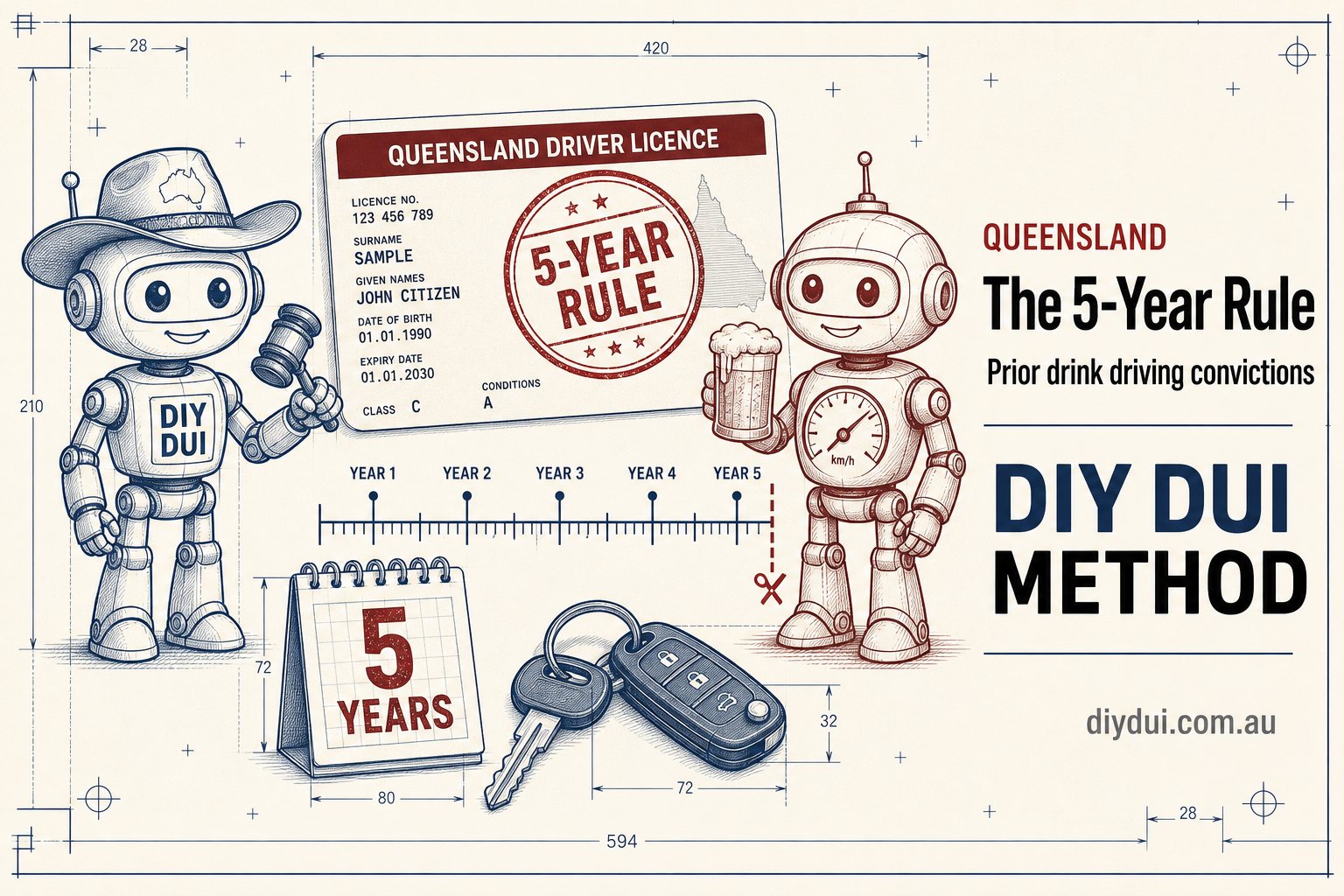
Queensland is the only state in Australia that offers a restricted work licence (Section 87 licence) for eligible drink driving offenders. You must meet strict criteria — including holding a current open licence, recording a BAC below 0.15, and having no drink driving convictions in the past five years. You must apply before the Magistrate imposes your disqualification. If you wait until after sentencing, it is too late.
Should I complete a Traffic Offenders Program before my court date?
Completing an approved Traffic Offenders Program before your sentencing date is a recognised mitigation factor. It demonstrates insight and proactive rehabilitation, and many Magistrates note it favourably. There are several approved programs available in Queensland — completing one before your court date is one of the most practical steps you can take.
What happens if the Magistrate’s sentence is different from what I expected?
You have the right to appeal a Magistrates Court sentence to the District Court within 28 days. However, an appeal is a separate legal process. If you are at all unsure about the outcome before sentencing, and your matter involves significant hardship or a work licence application, it is worth seeking further guidance before your hearing date.
Can I represent myself at drink driving court in Queensland?
Yes. Self-representation is common in drink driving matters at the Queensland Magistrates Court, particularly for first offenders with low or mid-range BAC readings. The key is preparation. The Magistrate will expect you to know your plea, make clear submissions, and present your materials properly.
⚠️ Important Notice
If your matter is complex, you dispute police facts, or your situation falls outside what this program covers, you should consider speaking with an experienced traffic lawyer.
Walk into Queensland Magistrates Court prepared
Every step in this article — done properly for you
The DIY DUI Method programs give you a complete, step-by-step preparation framework built specifically for Queensland Magistrates Court — QP9 review, remorse letter, character references, submissions, and work licence preparation if you are eligible.
QLD Plea Program — $330
QLD Plea + Work Licence Program — $440
180 days access · One-time payment · Information-only preparation resource
Also available
NSW DIY DUI Plea Program — $330
For New South Wales Local Court drink driving matters. Same structured preparation system, built for NSW.
The information on this page is general in nature and does not constitute legal advice. Laws and penalties can change. Always verify current information with official sources. DIY DUI is an information and preparation resource only.